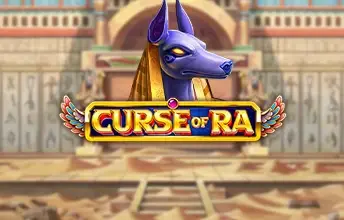

Curse of Ra Review
Four Leaf Gaming's Curse of Ra landed in May 2024 with a spec sheet that immediately demands attention: a 10,000x max win ceiling paired with a 96% RTP and high volatility. That combination places it firmly in the upper tier of risk-reward ratios among Egyptian-themed video slots released this year. The 5x3 grid runs 20 fixed paylines, bets scale from $0.20 to $100, and the feature set includes a Bonus Wheel, Buy Feature, Free Spins, Spin The Wheel mechanic, and Wilds — enough moving parts to keep sessions from feeling repetitive.
What separates Curse of Ra from the crowded Egyptian slot market isn't the theme itself — Ancient Egypt, Ra, Anubis, pyramids, and scarabs are well-trodden ground — it's how Four Leaf Gaming has structured the volatility around that wheel mechanic. High-variance players chasing a single outsized hit will find the math model aligned with their appetite. Low-frequency spinners looking for regular small returns will find the base game lean. This review breaks down exactly what you're signing up for.
RTP, Volatility, and Max Win — The Math Model Explained
The 96% RTP is the headline number and it holds up well in context. The Egyptian slot category is littered with titles sitting at 95.5% or below — Pragmatic Play's Book of Dead, one of the genre's benchmarks, runs at 96.21%, putting Curse of Ra just below that mark but comfortably ahead of the category floor. For a 2024 release from a smaller studio like Four Leaf Gaming, 96% signals a deliberate decision to stay competitive on the math rather than pad margins.
The 10,000x max win is where the spec sheet gets genuinely interesting. That ceiling is substantial — for comparison, Play'n GO's Rich Wilde and the Book of Dead caps at 5,000x, meaning Curse of Ra theoretically doubles that upside on a single spin. The trade-off is the high volatility classification, which means hit frequency data (not publicly disclosed for this title) is almost certainly low. Expect extended dry stretches in the base game; the 10,000x figure is a ceiling, not a likely outcome per session.
Bet range runs $0.20 to $100, which gives the game broad accessibility. At minimum stake, the 10,000x max win translates to $2,000 — meaningful but not life-changing. At $100 max bet, that same multiplier becomes $1,000,000, which reframes the slot as a legitimate high-roller option if the bankroll supports it.
Bonus Features Breakdown
Curse of Ra's feature architecture is built around five confirmed mechanics: Wild substitutions, Free Spins, a Bonus Wheel, a Spin The Wheel trigger, and a Buy Feature. The Wild functions as a standard substitute across the 20 paylines, filling gaps in winning combinations. Its role becomes more significant during the Free Spins round, where Flying Scarab Wilds activate — these are Wilds with additional movement or placement behavior that increases coverage across the reels during the bonus.
The Bonus Wheel and Spin The Wheel mechanic are the structural centerpiece of the game's variance profile. Landing the wheel trigger gives players a randomized outcome from a set of potential prizes or feature enhancements — this is where the high-volatility math concentrates its biggest payouts. Wheel-based bonus structures tend to produce polarized sessions: either the wheel lands on a multiplier-heavy free spins package or it returns a minor prize and the session resets. That binary nature is what drives the high-volatility classification.
The Buy Feature allows players to purchase direct bonus access rather than waiting for an organic trigger. Pricing for bonus buys typically runs 80-100x the base bet for this type of mechanic, though the exact cost for Curse of Ra isn't specified in the verified data. For players who find base-game waiting periods frustrating, the Buy Feature is a meaningful option — it concentrates risk and removes the slow build of organic triggering. Note that bonus buy availability varies by jurisdiction and casino operator.
How Curse of Ra Plays — Base Game and Session Feel
On a 5x3 grid with 20 fixed paylines, the base game of Curse of Ra operates as a relatively standard Egyptian reel structure. Symbol set pulls from the expected Egyptian iconography — Ra, Anubis, scarabs, pyramids — without deviation from the theme's conventions. The layout is familiar enough that experienced slot players will orient immediately without needing to consult the paytable for basic mechanics.
The honest assessment of the base game is that it's a delivery vehicle for the bonus round rather than a standalone experience. High volatility with undisclosed hit frequency means the base game will produce long stretches of small returns or misses. The Guaranteed Win feature referenced in the source material — which appears to be a base-game protection mechanic that activates after a defined number of losing spins — provides some floor protection, but it doesn't fundamentally change the session rhythm.
Players used to medium-volatility titles where the base game generates regular small wins will need to recalibrate expectations here. The correct mental model for Curse of Ra is: the base game is the cost of admission to the bonus round, and the bonus round is where the 10,000x ceiling becomes reachable. Sizing bets accordingly — with enough balance to survive 100-200 base-game spins before a trigger — is the practical approach.
Spindex Live Bet Data — What Our Tracking Shows
Curse of Ra has logged 156 tracked bets across Spindex's five crypto-casino data sources in the last 30 days. That's a modest volume figure for a 2024 release — for context, established titles on our platform routinely see 1,000+ monthly tracked bets — which reflects both Four Leaf Gaming's smaller distribution footprint and the slot's relatively recent launch date in May 2024.
The most significant data point from our tracking is the top recent hit of 402x. On a $100 max bet, that translates to a $40,200 return — a meaningful real-money outcome. However, 402x sits well below the 10,000x theoretical ceiling, which is expected given the small sample size. High-volatility slots with 10,000x maximums typically require tens of thousands of spins before the ceiling is approached in tracked data, so the 402x top hit doesn't indicate the max win is unreachable — it reflects early-stage data volume.
The low tracked-bet count also means trend signal is limited. We can't yet confirm whether Curse of Ra is gaining traction or plateauing in crypto-casino environments. We'll update this data as volume builds. Players who want to be notified when this slot crosses a significant hit threshold can bookmark the Curse of Ra page on Spindex.
Four Leaf Gaming — Provider Context
Four Leaf Gaming is a smaller studio operating in a market dominated by Pragmatic Play, Play'n GO, and NetEnt. For a slot player, the provider's size matters in two practical ways: distribution reach and math model credibility. On distribution, Four Leaf Gaming titles appear across a narrower range of casinos than major studio releases, which limits where Curse of Ra can be played — particularly in regulated markets where licensing requirements create additional barriers for smaller providers.
On math model credibility, the 96% RTP and 10,000x max win for Curse of Ra are competitive figures that don't require the studio's name to justify. The numbers stand independently. What Four Leaf Gaming lacks relative to larger studios is the extensive player review history and tracked-session data that gives players confidence in how a math model performs in practice versus on paper.
For players already comfortable with smaller-studio releases — common in crypto-casino environments, which is where Spindex's Curse of Ra tracking data originates — Four Leaf Gaming presents no unusual concerns. For players who exclusively play Pragmatic Play or Play'n GO titles and want extensive community data before committing, the limited tracking history is a legitimate consideration.
Who Should Play Curse of Ra
Curse of Ra is built for a specific player profile: high-variance seekers with bankroll depth and patience for extended base-game periods. The 10,000x ceiling and wheel-based bonus structure reward players who can sustain 150-200 spins without a significant hit and still have enough balance to capitalize when the bonus triggers. Underfunded sessions on high-volatility slots consistently produce losing outcomes not because the math is unfavorable but because the bankroll runs out before the variance resolves.
The Buy Feature is a meaningful differentiator for players who want to skip the base-game grind. If your session strategy is to buy directly into the bonus round, Curse of Ra's feature set — particularly the Bonus Wheel and Flying Scarab Wilds in free spins — gives you something worth buying into. This approach concentrates risk but also concentrates the probability of reaching the high-multiplier outcomes.
Casual players or those who prefer consistent small wins should look elsewhere. The undisclosed hit frequency combined with high volatility classification is a clear signal that Curse of Ra is not designed for low-risk entertainment. The 96% RTP is solid, but RTP is a long-run theoretical figure — in short sessions on a high-volatility title, actual return variance will be extreme in both directions.
Final Verdict
Curse of Ra delivers a coherent high-volatility proposition: a 96% RTP that competes with established Egyptian slots, a 10,000x max win that exceeds genre benchmarks like Book of Dead's 5,000x ceiling, and a bonus structure anchored by a wheel mechanic that concentrates the big-win potential in the free spins round. The Flying Scarab Wilds and Bonus Wheel give the feature set enough mechanical interest to justify the base-game patience required to reach them.
The legitimate criticisms are the limited player data available — 156 tracked bets on Spindex is a thin sample, and Four Leaf Gaming's smaller distribution footprint means community consensus is still forming — and the base-game pacing, which drags before the bonus triggers. Neither criticism undermines the math model, but both are real factors in the playing experience.
For high-variance players with a structured bankroll approach, Curse of Ra earns a recommendation. The 10,000x ceiling is credible given the volatility classification, the RTP is honest, and the Buy Feature gives players a direct path to the bonus mechanics. This is not a slot for every session type, but for the session type it's designed for, it delivers.
- +10,000x max win — doubles the ceiling of comparable Egyptian slots like Book of Dead
- +96% RTP is competitive for the Egyptian slot category
- +Buy Feature enables direct bonus access without base-game grind
- +Bonus Wheel and Flying Scarab Wilds add mechanical variety to the free spins round
- +Broad bet range ($0.20–$100) suits both casual and high-roller bankrolls
- -Hit frequency not publicly disclosed — base-game dry stretches can be long
- -Limited player tracking data given recent May 2024 launch
- -Smaller studio distribution means fewer casino options, especially in regulated markets
- -High volatility makes short sessions high-risk for underfunded bankrolls
Best for
Curse of Ra is a high-volatility Egyptian slot with genuine upside: 10,000x max win, a 96% RTP that holds up against category averages, and a multi-layered bonus structure anchored by a wheel mechanic. The base game will test patience before the features activate, but players targeting big-swing sessions will find the math model supports that goal. Recommended for high-variance enthusiasts with adequate bankroll depth.