
ZapLab Review
ELK Studios launched ZapLab in April 2025 with a feature list that reads more like a mechanics stress-test than a standard slot release. Seventeen distinct features — including walking symbols, mega symbols, wilds with multipliers, and an energy collection system — are packed onto a 7x7 cluster-pays grid, all chasing a 10,000x maximum win. The RTP sits at 94%, which is below the industry standard of 96%, and medium-high volatility means the ride to that ceiling is not a straight line. Hit frequency clocks in at 26.1%, so roughly one in four spins produces a return — reasonable for a volatile cluster game, but don't expect steady base-game payouts. The theme is Laboratory and Adventure, with monster and electricity elements throughout. What makes ZapLab genuinely interesting is not any single feature but the way the mechanic stack interacts: cascades feed the energy meter, which unlocks substitution symbols and multiplier wilds, creating feedback loops that can accelerate rapidly. Whether that acceleration is enough to justify the below-average RTP is the central question this review answers.
RTP, Volatility, and the Real Cost of Playing ZapLab
The first number that demands attention is the 94% RTP. At a time when most reputable video slots ship at 96% or higher — ELK Studios' own Nitropolis 4 carries a 96% RTP — ZapLab gives back two percentage points less per wagered dollar over the long run. That gap is not trivial across extended sessions. A player cycling €1,000 through a 96% RTP slot expects to retain €960 in theoretical returns; at 94%, that figure drops to €940. The difference compounds quickly.
Medium-high volatility compounds the RTP disadvantage in the short term but creates the conditions for the 10,000x max win. A 10,000x ceiling is genuinely competitive — it matches ELK's own Beast Mode and sits above the studio's earlier cluster releases — but reaching it requires the full mechanics chain to fire simultaneously. The 26.1% hit frequency softens the variance somewhat; roughly one in four spins returns something, which helps preserve bankroll during the grind toward a feature trigger.
The practical implication: ZapLab is a slot that rewards session depth over short-burst play. The below-average RTP means casual players taking short sessions are statistically more exposed than they would be on a 96%+ title. High-bankroll players who can absorb variance have the best shot at the upper end of the pay table.
How ZapLab Plays: The 7x7 Grid and Cluster Mechanics
ZapLab runs on a 7x7 grid using a cluster pays structure, meaning wins form when groups of five or more matching symbols connect horizontally or vertically — no paylines, no fixed win directions. After each winning cluster, the Avalanche (cascading) mechanic removes winning symbols and drops new ones into the vacated spaces, giving a single spin multiple consecutive win opportunities without an additional wager.
The grid size is worth pausing on. A 7x7 field contains 49 symbol positions, which is substantially larger than the 6x6 grids common in cluster games like NetEnt's Aloha or Play'n GO's Reactoonz. More positions mean larger potential clusters and more cascades per spin, which is the mechanical reason the 10,000x ceiling is achievable. It also means the energy collection meter — which tracks symbols gathered across cascades — fills more quickly during hot streaks.
The Gonzo mechanic reference in the feature list is a nod to the cascade-with-multiplier structure that Gonzo's Quest popularized: each consecutive cascade within a single spin increases the multiplier applied to subsequent wins. On a 7x7 grid with this many symbol types and substitution mechanics layered on top, the cascade chain potential is among the highest ELK has built into a single release.
Feature Stack: What Each Mechanic Actually Does
ZapLab's feature list is the longest ELK Studios has attached to a single release in recent memory. The core engine is the Avalanche cascade, but the surrounding mechanics are what create the game's ceiling. Expanding Symbols grow to cover larger grid areas when part of a winning cluster. Mega Symbols appear as 3x3 blocks occupying nine grid positions simultaneously, dramatically increasing cluster size when they land adjacent to matching symbols. Walking Symbols and Moving Wilds shift position after each cascade, maintaining their presence on the grid across multiple drops rather than disappearing after one win.
The Wilds with Multipliers mechanic attaches a multiplier value to wild symbols — these stack with cascade multipliers, meaning a wild landing during a third or fourth consecutive cascade can apply a compounded multiplier to the entire win. The Remove Symbols feature clears specific symbol types from the grid, which can either open space for higher-value clusters or trigger the Stacked symbols mechanic depending on context. The Symbols Collection (Energy) system tracks accumulated symbols across cascades and unlocks additional features once thresholds are crossed — this is the primary progression mechanic tying the session together.
The Buy Feature option is present, allowing players to purchase direct bonus access at a fixed multiple of their bet. This is significant for players who want to bypass base-game variance and target the feature state directly, though the 94% RTP applies regardless of entry method. Random Wilds and Substitution Symbols round out the list, ensuring that even spins without large clusters have a path to unexpected wins through random placements.
ZapLab on Spindex: Live Tracked-Bet Data
ZapLab has generated 260 tracked bets across Spindex's five crypto-casino data sources over the past 30 days. For a slot released in April 2025, that volume indicates early but measured adoption — players are testing it, not yet committing to it at scale. The top recorded hit in our dataset is 146x, which is notably modest relative to the 10,000x theoretical ceiling. A 146x top hit across 260 bets is consistent with medium-high volatility behavior: the big wins are real but rare enough that our current sample hasn't captured one.
The 146x figure is worth contextualizing. Across comparable ELK Studios cluster releases tracked on Spindex, top hits in the first 30 days post-launch typically range from 80x to 400x depending on the session lengths and bet sizes in the sample. ZapLab's 146x sits in the lower-middle of that range, suggesting the feature stack hasn't fully unlocked in our tracked sessions yet — or that the player base is still learning the mechanics.
For players using Spindex to time their sessions, ZapLab's current trend signal warrants watching rather than immediate heavy commitment. As tracked-bet volume grows past 1,000 sessions, the hit distribution will give a clearer picture of where the real win clusters sit on the pay table.
ZapLab's Theme and Visual Identity
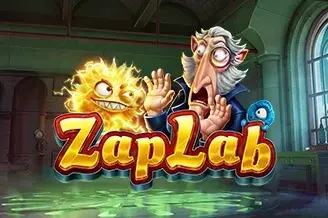
ZapLab is a Laboratory and Adventure slot with Electricity, Monsters, and Potion sub-themes. The color palette runs across blue, green, red, and violet — a deliberate choice for a mad-scientist aesthetic. Visuals are functional to the mechanics: the 3x3 Mega Symbol blocks, expanding symbols, and moving wilds all have distinct visual treatments that make the grid readable during complex cascade sequences.
For players who care about theme coherence, the monster-and-laboratory setting is internally consistent. For players who don't, the mechanics are interesting enough to hold attention independent of the theme.
Who ZapLab Is Built For
ZapLab is built for players who want mechanical depth over simplicity and are willing to accept a below-average RTP as the price of a 10,000x ceiling. The 17-feature stack is not beginner-friendly — understanding how the energy collection meter interacts with the cascade multiplier and wild multipliers requires several sessions of observation before optimal play decisions become intuitive.
High-volatility cluster-game regulars who have worked through titles like ELK's own Nitropolis series or Hacksaw Gaming's cluster releases will adapt quickly. The 7x7 grid and Gonzo-style cascade multipliers are familiar structural elements; the novel layer is the walking/moving symbol mechanics and the energy progression system. Players who enjoy tracking a session-level progression mechanic — rather than just spinning toward a binary bonus trigger — will find ZapLab more engaging than a standard free-spins slot.
Casual players and bankroll-conservative players should approach with caution. The 94% RTP is a structural disadvantage that doesn't disappear regardless of session length or feature knowledge. The Buy Feature option exists, but it doesn't change the underlying return rate — it only changes how quickly you reach the feature state.
Final Verdict on ZapLab
ZapLab is one of ELK Studios' most mechanically ambitious releases. The 7x7 cluster grid, 17-feature stack, and 10,000x ceiling form a genuinely high-ceiling product for players who want complexity and variance. The Gonzo-style cascade multipliers combined with walking wilds, mega symbols, and an energy collection system create feedback loops that — when they align — can produce outsized wins from a single spin sequence.
The significant caveat is the 94% RTP. Compared to ELK's own catalog standard of 96% and the broader industry benchmark, ZapLab costs players more per spin in expected value. That's a real trade-off, not a minor footnote. The base game pacing also tends to feel slow before the energy meter and cascade multipliers start firing together — players in short sessions may exhaust their bankroll in the build-up phase without ever reaching the slot's peak state.
For the right player — high bankroll, high volatility tolerance, genuine interest in mechanics — ZapLab delivers a feature environment that few 2025 releases have matched. For everyone else, the RTP gap is a reason to look at ELK's 96% titles first.
- +10,000x max win is competitive within ELK Studios' catalog
- +17 distinct features create genuine mechanical depth and cascade feedback loops
- +7x7 grid enables larger clusters and longer cascade chains than standard 6x6 cluster games
- +Buy Feature available for direct bonus access
- +26.1% hit frequency provides reasonable base-game return cadence for a volatile slot
- +Walking Symbols and Moving Wilds extend feature longevity across cascade sequences
- -94% RTP is two percentage points below the ELK Studios catalog standard and industry benchmark
- -17-feature stack has a steep learning curve for new players
- -Top tracked hit of 146x across 260 Spindex-monitored sessions suggests big wins are infrequent in early data
- -Base game can feel slow before the energy meter and cascade multipliers activate together
- -Bet range data not yet confirmed — limits may restrict access for some players
Best for
ZapLab is a mechanically dense cluster slot with a legitimate 10,000x ceiling, but the 94% RTP is a real cost players should price in before committing real money. The 17-feature stack rewards patience and session volume. Best suited to high-volatility hunters who want complexity over simplicity and are comfortable with longer dry spells between meaningful hits.