
Disorder Review
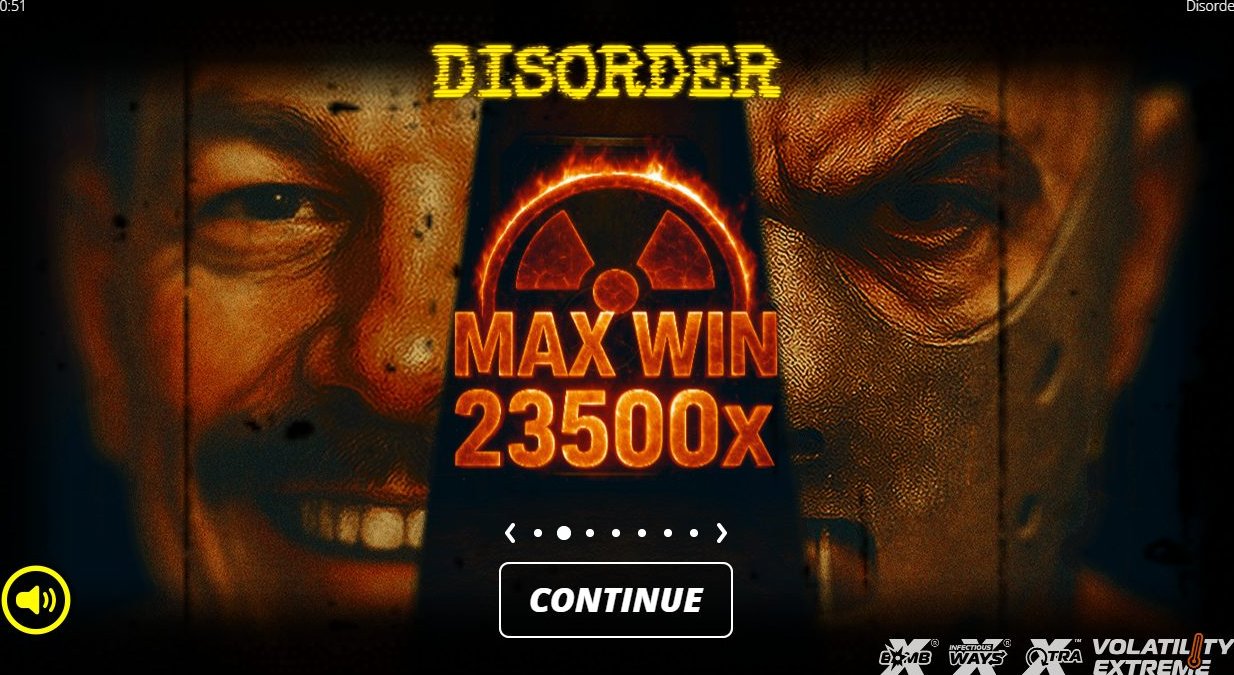
Nolimit City has built a reputation for pushing slot design into uncomfortable territory, but Disorder — released in April 2025 — may be the studio's most structurally ambitious title to date. Set against a Cold War-era psychological horror backdrop, it pairs a 23,500x max win ceiling with one of the most layered feature systems the provider has shipped. The bet range runs from $0.20 to $100, and with 1,728 ways to win, there is genuine mechanical depth here beyond the surface-level theming.
What separates Disorder from the typical high-volatility release is the degree to which its features interact. Fire Frames, Enhancer Cells, and three distinct free spin modes don't just stack — they escalate. Each layer unlocks the next, which means sessions can go from completely dry to explosive within a single bonus round. The 94.12% RTP sits below the industry standard of 96%, and that gap matters for longer sessions. This is a slot that demands patience and bankroll discipline, but the upside — as confirmed by real tracked-bet data on Spindex — is real.
RTP, Volatility, and What the Numbers Actually Mean
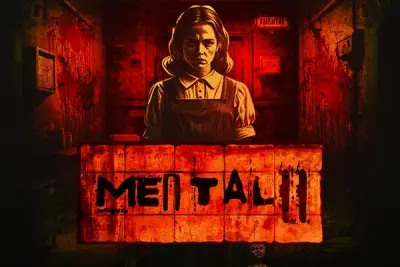
At 94.12% RTP, Disorder sits noticeably below the current market benchmark. For context, Nolimit City's own Mental — a thematically linked release — ships at 96.06% RTP, making Disorder nearly two full percentage points cheaper per spin in expected return. That difference compounds quickly over a long session, and players should factor it in before committing to a real-money run.
The volatility is rated high, and the 25.95% hit frequency confirms it: roughly three in four spins return nothing. That's not unusual for this class of slot, but it means variance swings are wide and dry runs between bonuses can be extended. The 23,500x max win is the payoff for absorbing that variance — it's a ceiling that places Disorder comfortably above Nolimit City's average but below outliers like Tombstone RIP (10,000x) or their own Deadwood (5,000x). The 23,500x is genuinely competitive at the top end of the provider's catalog.
The RTP range feature listed in the spec means different game modes may operate at different return rates — particularly relevant for bonus buy options, which often carry a slightly adjusted RTP compared to base game play. Players using the Enhancer Booster at 15x stake should verify the active RTP for that mode before committing.
How Disorder Plays: Fire Frames and Enhancer Cells
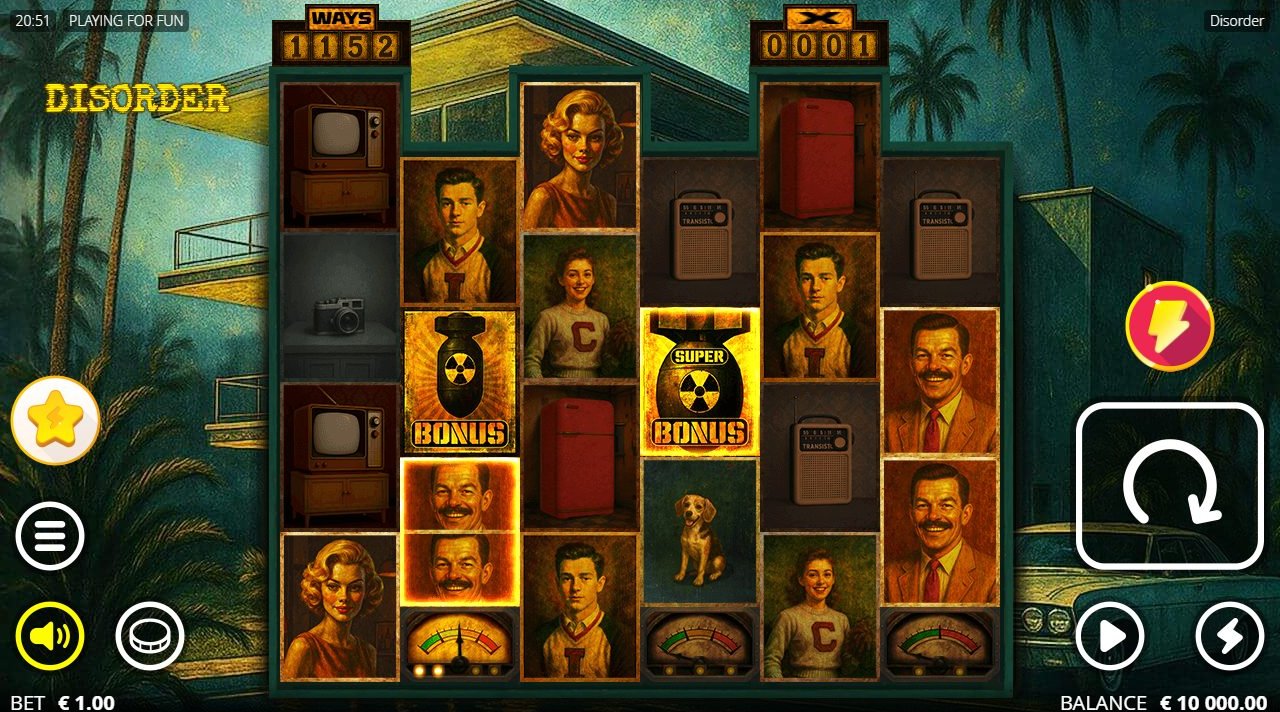
The core mechanic revolves around Fire Frames, which appear randomly during play and split symbols that land inside them. Standard pay symbols can fragment into up to 16 smaller versions, while scatter symbols that land within a Fire Frame mutate into super scatters — a distinction that becomes critical during bonus triggering.
Enhancer Cells sit dormant beneath reels 2, 4, and 6, activated progressively by Fire Frame accumulation. Four frames wake the first cell, seven activate two, and nine bring all three online. Once all three are active, every subsequent pair of frames reactivates the full trio. Each cell fires one of six possible effects: Molotov (replicates a chosen symbol up to 16 times across the grid), Delusion (converts all instances of a symbol into the top-paying one), Paranoia Multiplier (adds a multiplier between 1x and 999x and becomes a wild), Nuclear Wild (converts an entire reel to wilds), xBomb (eliminates non-winning symbols and increments the win multiplier via cascade), or Family Symbol (summons one of five character symbols with distinct behavior).
The interaction between Fire Frames and Enhancer Cells is what gives Disorder its mechanical identity. The base game can feel slow — most spins won't generate enough frames to trigger cells — but when the system ignites, the cascade of effects can compound rapidly. The 1,728 ways-to-win structure means that symbol replication effects like Molotov have real combinatorial impact when the grid fills.
Bonus Modes: Three Stages of Escalation
Free spins trigger when three or more scatter symbols land, with each standard scatter adding two spins and each super scatter contributing three. The three available free spin variants — Obsessive Compulsive Spins, Antisocial Personality Spins, and Severe Dissociative Identity Spins — represent ascending levels of intensity, with Fire Frame frequency increasing and the game's visual environment shifting noticeably at each stage.
During all free spin modes, Fire Frames appear at a higher rate than in the base game, and base game multipliers reset at the start of each round. The Additional Free Spins feature allows top-up spins during a bonus, while the Respin Locking Win mechanic and Paid Respin option give players further control over extending high-value states. The Extra Spin mechanic — available when Antisocial or Severe Dissociative modes conclude — lets players purchase one final spin that carries forward the multiplier and sticky Fire Frames from the previous round, provided the cost is no more than the last recorded win.
The Symbols Collection (Energy) feature adds a persistent progression layer, tracking energy accumulation across spins. Combined with the Splitting Symbols mechanic and Stacks, the bonus rounds can generate grid states that look nothing like the base game — dense with fragmented symbols and active multipliers simultaneously. The depth here is genuine, not cosmetic.
Bonus Bet and Buy Feature Breakdown
Disorder offers three optional bet modifiers before spinning. Bonus Booster costs 2x the base bet and improves the odds of triggering a bonus round. Fire Booster costs 4x and improves both bonus trigger odds and Fire Frame frequency. Enhancer Booster costs 15x the base bet and guarantees nine Fire Frames on the grid, which means all three Enhancer Cells activate immediately — the most aggressive modifier available without going to a full bonus buy.
The direct Buy Feature offers four tiers. Obsessive Compulsive Spins costs 80x stake. Antisocial Personality Spins costs 300x. Severe Dissociative Identity Spins costs 800x. The Lucky Draw option at 3,700x stake randomly assigns one of the three bonus types — paying a premium for randomness, which is an unusual design choice that essentially adds a second layer of variance on top of an already volatile purchase.
At $100 maximum bet, the Severe Dissociative buy costs $80,000 per purchase — well outside casual territory. The Lucky Draw at 3,700x would cost $370,000 at max bet. Even at a $1 base bet, the 800x buy is $800. These figures are relevant context for bankroll planning, particularly for players at crypto casinos where higher stakes are more common.
Spindex Live Data: 33K Tracked Bets and a 1,855x Recent Hit
Disorder has logged 33,000 tracked bets across Spindex's five crypto-casino sources in the past 30 days, placing it in the mid-tier activity range for a slot less than a year old. The current trend signal is warm — volume is building rather than plateauing, which typically indicates the title is still in active discovery among new players rather than settling into a stable regular audience.
The largest recent hit recorded on Spindex is 1,855x. That's a meaningful data point: it confirms the bonus system is firing at real crypto casinos under live conditions, but 1,855x is well short of the 23,500x theoretical ceiling. The gap between a strong session result and the maximum win is wide, which is consistent with the extreme volatility rating. The verified real-money record from external sources — a 23,500x hit achieved using the Fire Booster modifier on a 12 UAH base bet — demonstrates the ceiling is reachable, but the conditions required (Paranoia Multiplier, xBomb, Molotov, and a 12,960-way combination firing simultaneously) illustrate how rare full convergence is.
For players using Spindex to time entries, the warm trend and growing bet volume suggest liquidity is healthy across the tracked casinos — meaning demo-to-real conversion rates are up and the game is being actively played rather than just browsed.
Theme and Visual Design
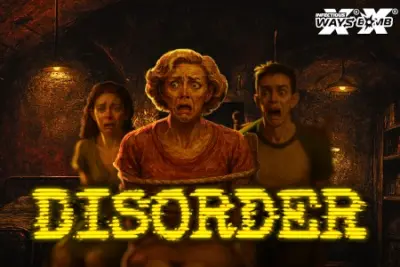
Disorder is categorized under Apocalypse, Horror, and Undead themes, with additional tags covering Darkness, Bombs, Skull, and Mystic. The visual design uses a Cold War-era domestic setting that deteriorates progressively across the three bonus modes, with the base game presenting a surface-level 1950s American household aesthetic that breaks down as the free spin stages advance.
The thematic connection to Nolimit City's Mental series is intentional — character designs in Disorder's later bonus stages link directly to figures from that release, making this effectively a prequel in a shared narrative universe. That kind of cross-title continuity is rare in slot design and adds genuine replay context for players already familiar with Mental.
One mild reservation: some of the character art in the later bonus stages has a rendered quality that reads as AI-assisted rather than hand-illustrated, which slightly undercuts the otherwise strong atmospheric commitment. It doesn't break the experience, but it's noticeable against the detailed background work.
Who Should Play Disorder
Disorder is built for experienced high-volatility players who are comfortable with extended losing sequences in exchange for large, infrequent payouts. The 25.95% hit frequency means the majority of spins are non-winning, and the 94.12% RTP accelerates bankroll erosion compared to standard-RTP alternatives. A minimum $200 session bankroll is a reasonable floor for base-game play at $0.20 per spin; at higher stakes or with bonus buys, the exposure scales sharply.
Players who enjoy mechanically complex systems — where understanding feature interactions gives a genuine edge in how they use modifiers — will find Disorder more engaging than most high-volatility releases. The three-tier bonus structure and the Enhancer Cell progression reward players who understand what they're building toward, rather than just waiting for a scatter to land.
Casual players or those with limited session budgets should approach with caution. The bonus buy entry points are steep, the base game can run cold for extended periods, and the horror-adjacent theme and escalating psychological imagery are not designed for light entertainment. This is a slot with a specific audience in mind, and it delivers for that audience.
Final Verdict
Disorder is among the most mechanically layered slots Nolimit City has released. The Fire Frame and Enhancer Cell system creates a genuine escalation structure rather than a simple scatter-to-bonus pipeline, and the three distinct free spin modes give the title replay depth that most high-volatility slots don't sustain. The 23,500x ceiling is real — documented under live conditions — and the Spindex tracked-bet data confirms the game is active and paying at crypto casinos right now.
The trade-offs are real and worth naming clearly. The 94.12% RTP is a meaningful cost that separates Disorder from provider peers like Mental (96.06%) or Tombstone RIP (96.00%). The hit frequency of 25.95% means most sessions will feel punishing before they feel rewarding. And the bonus buy options — while well-designed — are priced at levels that exclude most recreational bankrolls from the higher-tier entries.
For the right player — patient, bankrolled, and interested in a slot that has genuine narrative and mechanical ambition — Disorder earns serious consideration. It's not a casual spin. It's a commitment.
- +23,500x max win verified under live conditions
- +Escalating three-tier free spin structure with genuine mechanical depth
- +Fire Frames and Enhancer Cells create a layered, interactive base game
- +Six distinct Enhancer Cell effects including a 999x multiplier
- +Narrative continuity with Nolimit City's Mental series adds replay context
- +Wide bet range ($0.20–$100) with multiple modifier options
- -94.12% RTP is below the industry standard and below most Nolimit City peers
- -25.95% hit frequency means long dry stretches between wins
- -Bonus buy tiers are expensive — 800x for the top standard mode
- -Lucky Draw at 3,700x adds unnecessary variance to an already volatile purchase
- -Some character art in later bonus stages reads as AI-assisted
- -Psychological horror theme and escalating imagery not suited to all players
Best for
Disorder is a high-ceiling, high-punishment slot that rewards players who understand its escalating feature structure. The 23,500x max win is legitimate, the bonus system is genuinely complex, and the three-tier free spins progression gives it replay depth that most high-volatility titles lack. The 94.12% RTP is a meaningful cost, and dry spells are long. Best suited to experienced bankrolls chasing big swings.