




Orbitfall Review
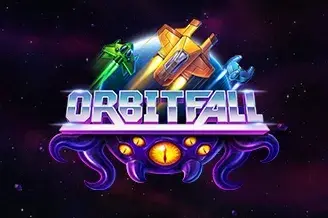
ELK Studios released Orbitfall in March 2025, and it arrives as one of the studio's more mechanically ambitious cluster-pays builds. The 6x6 grid expands during play as rows shift between six and eight, and the feature stack — Avalanche cascades, a Level Up progression system, Mega Symbols, a Lazer Feature that removes entire columns, and an Alien Attack that restructures the grid — is dense even by ELK's standards.
The headline number is a 7,500x max win, which sits at the upper end of ELK's recent output but below the four- and five-figure ceilings that some rival studios now advertise. The RTP is published at 94%, a full two percentage points below the 96% that most cluster-pays titles from competing studios carry. Hit frequency is 22.1%, meaning roughly one in every four-and-a-half spins produces a return. That combination — high volatility, below-average RTP, and a moderate hit rate — defines the risk profile before a single bet is placed.
The theme is Space / Aliens. This review covers every mechanical layer and gives a straight read on whether the maths justify the ride.
How Orbitfall Plays
Orbitfall runs on a 6x6 grid that isn't fixed — the row count shifts between six and eight rows depending on game state, which changes the number of active cluster positions mid-session. Wins are formed by Cluster Pays, requiring groups of five or more matching symbols touching horizontally or vertically. Every winning cluster triggers an Avalanche, removing winning symbols and dropping new ones from above, so a single drop can chain into multiple consecutive wins without an additional bet.
The Mega Symbol mechanic introduces 3x3 oversized symbols that occupy nine grid positions simultaneously. When a Mega Symbol lands as part of a winning cluster, it counts as nine individual symbols, which can dramatically inflate the cluster size and the attached multiplier. Wild symbols substitute for all standard pay symbols and can appear anywhere on the grid.
The Level Up system is the structural spine of the game. As you clear specific symbol types — referred to in the game as blockers — the level advances, unlocking new mechanics and eventually opening the Final Battle mode. This progression layer means the bonus round isn't a static free-spins screen; it escalates as you play through it, with each level adding pressure and potential. The grid-reshaping element means the playing field you start a bonus round on may look quite different by the time the last drop resolves.
RTP, Volatility, and Max Win
The certified RTP for Orbitfall is 94.00%. That figure needs context: the cluster-pays segment is competitive, and titles like Reactoonz 2 (Play'n GO, 96.20%) and Jammin' Jars 2 (Push Gaming, 96.40%) both return significantly more per unit wagered. Orbitfall's 94% means the house edge is roughly double what those alternatives carry — a meaningful difference for anyone playing at volume.
Volatility is rated high, and the 22.1% hit frequency gives that a practical shape. Winning drops occur on about one in every 4.5 spins in the base game, which is moderate rather than punishingly rare. The tension is that when wins don't cascade into the bonus progression, the base game can feel flat — the payout distribution is skewed heavily toward the feature states rather than base-game cluster wins.
The 7,500x max win is achievable only through the deepest bonus states — Final Battle with stacked multipliers and Mega Symbol coverage across the expanded grid. For comparison, ELK's own Nitropolis 4 carries a 50,000x ceiling, which makes Orbitfall's cap look modest within the same studio's catalogue. That said, 7,500x at a $1 bet is $7,500, which is a real number. The realistic session range for most players will be determined far more by the 94% RTP than by the theoretical maximum.
Bonus Features Breakdown
The Free Spins bonus in Orbitfall grants five free drops as the entry point, but the drop count alone undersells the mechanic. Each free drop feeds the Level Up system — clearing blockers advances the level, and higher levels modify what the Lazer Feature and Alien Attack can do within that bonus round.
The Lazer Feature removes entire columns of symbols from the grid, which serves two purposes: it clears blocker symbols that are preventing level progression, and it creates space for new symbols to fall in the subsequent Avalanche, potentially forming new clusters. The Alien Attack feature reshapes the grid itself, altering the row configuration and repositioning active symbols. In combination, these two features mean the bonus round has a genuine tactical dimension — the order in which columns are cleared and the grid state when an Alien Attack fires both affect the outcome.
Multipliers accumulate through cascades and level progression. The Mega Symbol (3x3) can appear during the bonus and, when it lands in a high-multiplier state with a large cluster, produces the win values that approach the upper end of the pay table. The Reelset Changing mechanic — the row expansion from six to eight — also activates during the bonus, increasing the grid surface and the number of positions available for cluster formation. Five features interacting simultaneously makes Orbitfall's bonus one of the more complex in ELK's current library, though that complexity also means variance within the bonus itself is high.
Bet Range and Accessibility
Orbitfall accepts bets from $0.20 to $100 per drop, which covers the full range from low-stakes recreational play to mid-to-high roller sessions. The $0.20 floor is accessible enough that demo play transitions naturally to real-money at minimal cost, and the $100 ceiling is sufficient for most players who want meaningful exposure to the 7,500x max win in dollar terms.
At $0.20 per drop, a 7,500x win would return $1,500 — a strong relative return but modest in absolute terms. Players targeting larger absolute wins will need to size up, and at higher bet levels the 94% RTP becomes a more significant cost per session. A $100 bet with a 6% house edge means $6 of theoretical loss per drop before variance, which accumulates quickly in a high-volatility game where the bonus may not trigger for 50 or more drops.
The game is classified as a Video Slot and runs on ELK's standard HTML5 engine, meaning it is available across desktop and mobile without a separate download. The 6x6 grid renders cleanly on portrait mobile, though the expanded 6x8 state during bonus play takes up more screen real estate — something to factor in on smaller devices.
Who Orbitfall Is Best For
Orbitfall is built for players who want mechanical depth in their cluster-pays experience. The Level Up progression, grid reshaping, and interacting feature layers give the bonus round a quality that rewards attention — this isn't a slot where you trigger free spins and watch a number tick up passively. If you enjoy following the internal logic of a bonus as it escalates, Orbitfall delivers that.
High-volatility tolerance is a prerequisite. The 22.1% hit frequency means the base game produces wins often enough to sustain session length at lower bets, but the payout weight sits in the bonus states, and those can go long between triggers. Players who prefer steady base-game returns or lower variance will find the 94% RTP and bonus-dependent structure frustrating.
Players who are RTP-sensitive should note the gap versus the cluster-pays field. If maximising theoretical return per session is a priority, there are cluster titles from Push Gaming and Play'n GO that return two or more percentage points higher. Orbitfall makes sense for players who value the feature design over the raw maths — it's the right trade-off for some, and the wrong one for others.
Final Verdict
Orbitfall is a technically accomplished cluster-pays slot that ELK Studios released in early 2025 with one of the more intricate bonus architectures in their catalogue. The Lazer Feature, Alien Attack, Level Up progression, Mega Symbols, and grid expansion all interact in ways that produce genuine variety across bonus rounds — no two sessions in the feature play identically.
The limiting factor is the 94% RTP. It's published, it's verifiable, and it costs players more per session than most comparable cluster titles on the market. That's not a disqualifying flaw — plenty of players accept lower RTPs for games they enjoy — but it should be the first number anyone checks before depositing. Paired with high volatility, it means Orbitfall requires either a generous bankroll or disciplined bet sizing to experience the feature depth it's designed around.
At the right stake level, with the right expectations, Orbitfall is one of ELK's more rewarding mechanical experiences of 2025. The 7,500x ceiling won't satisfy players chasing the absolute top end of the market, but the journey through the Final Battle is more engaging than most slots that promise bigger numbers.
- +Layered bonus architecture with Level Up progression and grid reshaping
- +Lazer Feature and Alien Attack create genuine variety across bonus rounds
- +Mega Symbol (3x3) adds meaningful cluster-size upside
- +22.1% hit frequency keeps base-game sessions moving
- +Full $0.20–$100 bet range suits a wide stake spread
- +6x6 grid expands to 6x8 in key game states, increasing win positions
- -94% RTP sits below the cluster-pays market average by approximately 2 percentage points
- -7,500x max win is modest relative to ELK's own wider catalogue
- -Base game pacing can drag before the bonus progression activates
- -High volatility requires a patient bankroll to reach the feature states consistently
Best for
Orbitfall is a high-volatility cluster slot with a genuinely layered feature system and a 7,500x ceiling. The 94% RTP is the honest sticking point — it's below the cluster-pays market average and will cost players more per session in theoretical return. The Level Up progression and grid-reshaping mechanics give the bonus round real depth, but casual players should size bets conservatively and go in knowing the edge is steeper than most ELK titles.