




Ankh of Anubis Awakening Review
Play'n Go released Ankh of Anubis Awakening in August 2024, five years after the original Ankh of Anubis carved out a niche with its futuristic Egyptian aesthetic. The sequel runs on a 3-4-4-4-3 layout across 576 ways to win, and it raises the ceiling considerably — 15,000x versus the original's more modest potential. Medium volatility keeps the ride from being punishing, though the 94.2% RTP sits below the current industry standard of 96%, which is worth factoring in before committing real money.
The feature set expands on the original in two meaningful ways: random wilds and a respin mechanic are new additions layered on top of the returning free spins with additive wilds. Bets run from $0.10 to $100, making it accessible across most bankroll sizes. At Spindex we've tracked 253 real-money bets on this title across five crypto-casino sources over the past 30 days, giving us a live read on how it's actually performing in the wild.
RTP, Volatility, and Max Win
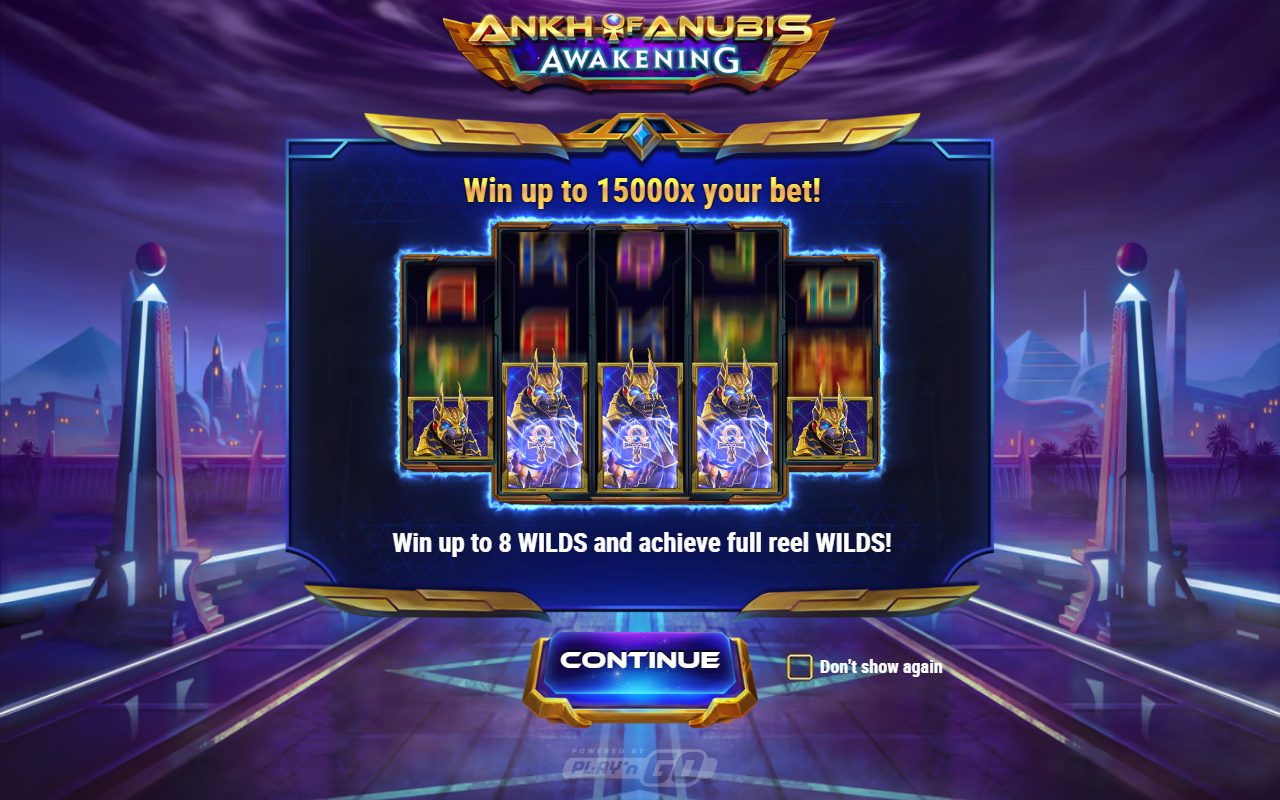
The headline number that demands attention is the 15,000x max win. For a medium-volatility slot, that ceiling is unusually high — most medium-vol titles from Play'n Go cap out between 5,000x and 10,000x, so Ankh of Anubis Awakening is an outlier in its own provider catalogue. The tradeoff is the 94.2% RTP, which is roughly 1.5 to 2 percentage points below what most players would consider acceptable for regular play.
To put that in context: Play'n Go's own Reactoonz 2 ships at 96.20%, and the wider industry median for video slots sits around 96%. At 94.2%, the house edge is 5.8% — nearly double the edge on a 96% game. That matters most for high-volume sessions. Casual players grinding at $0.10 per spin will barely notice; anyone playing $10+ per spin regularly should weigh that gap carefully.
The medium volatility classification means the hit pattern should be reasonably balanced — not the long dry spells of a high-vol title, but not the constant small returns of a low-vol grinder either. Hit frequency is not publicly disclosed for this release, so the medium label is the best available guide. The 576-way structure on the 3-4-4-4-3 grid gives the math model plenty of room to distribute wins across the session.
How Ankh of Anubis Awakening Plays
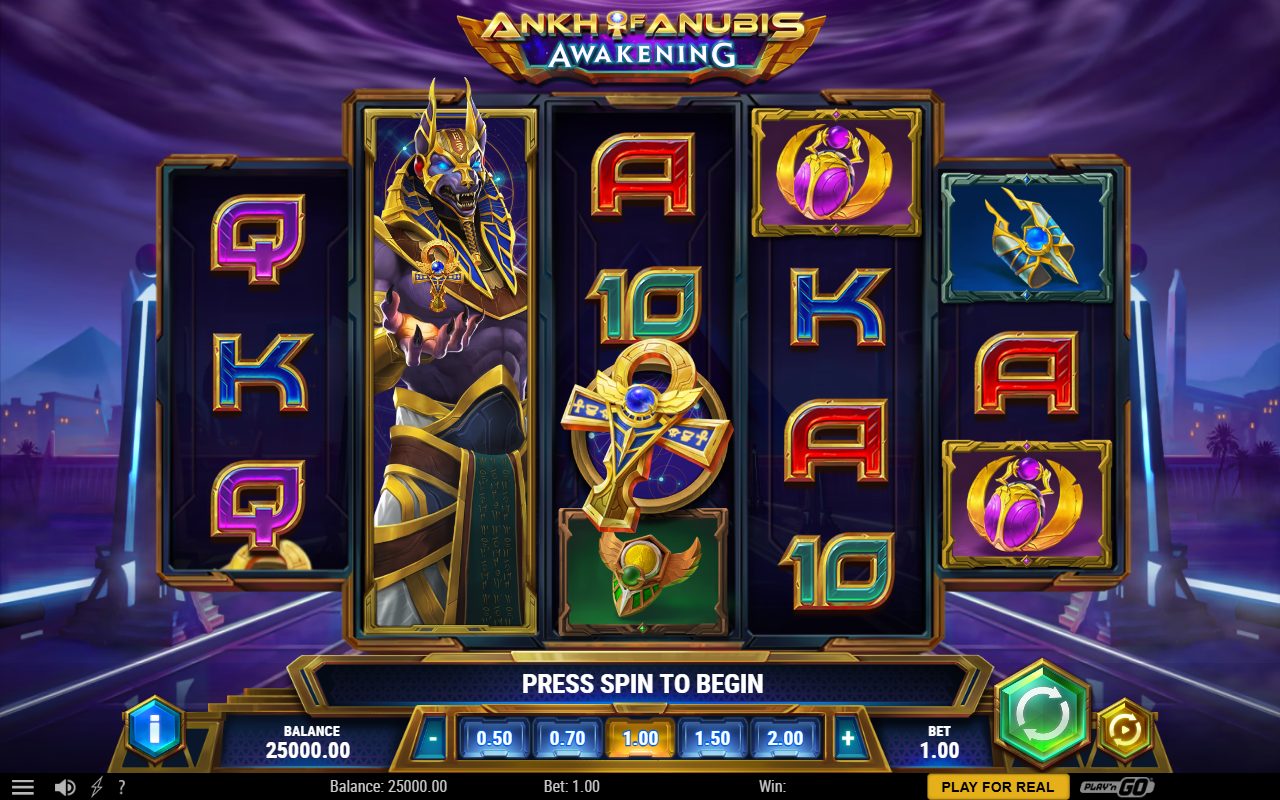
The grid is a 3-4-4-4-3 configuration — three reels wide at the outer columns, four rows deep in the middle three — producing 576 ways to win without traditional paylines. This shape naturally concentrates action in the centre of the grid, and the layout is unchanged from the original Ankh of Anubis, which means returning players will find the base game immediately familiar.
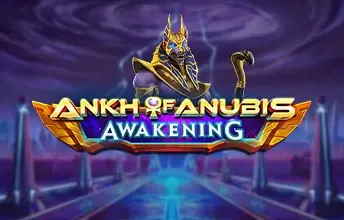
Bet range spans $0.10 to $100 per spin, which covers most player types. The Egyptian theme is filed under the Adventure and Ancient Civilizations categories, with a futuristic design direction that distinguishes it from the standard sand-and-hieroglyphs approach the genre usually takes. One factual note on visuals: the colour palette leans heavily on black and dark blue, consistent with the theme tags in the spec data.
Base game pace is steady rather than relentless. The random wilds can fire at any point, which breaks up the rhythm in a way the original's feature set didn't allow. That unpredictability in the base game is one of the more noticeable mechanical differences between the two titles.
Bonus Features Breakdown
The feature set in Ankh of Anubis Awakening has three distinct components: free spins with additive wilds, random wilds, and the respin mechanic. The random wilds are a base-game addition — they can appear on any spin without a trigger, adding wild symbols to the reels unpredictably.
Free spins are triggered by landing 3, 4, or 5 Ankh scatter symbols, awarding 10, 15, or 20 free spins respectively. Once inside the feature, every Ankh scatter that lands is collected. When five Ankhs have been accumulated, Anubis adds wild symbols directly to the reels, increasing win frequency during the remaining spins. The free spins can be retriggered: 3, 4, or 5 additional scatters award +3, +4, or +5 extra spins, and the theoretical maximum is 500 free spins in a single trigger — an extreme outcome, but one that explains part of the 15,000x ceiling.
The respin mechanic activates whenever a wild lands during the free spins phase. The free spins pause, and the respin sequence runs to completion with sticky wilds in play before the remaining free spins resume. Ankh symbols are absent during respins, which keeps the two mechanics cleanly separated. The interaction between sticky wilds during respins and the additive wild accumulation system is where the largest wins are built — the respin doesn't just add a single extra chance, it can compound with wilds already on the board.
Live Spindex Data: 253 Tracked Bets
Spindex has tracked 253 bets on Ankh of Anubis Awakening across five crypto-casino sources over the past 30 days. For a title released in August 2024, that volume is modest — it suggests the game is still building its audience rather than dominating any single casino's traffic. The data pool is real-money action, not demo play, which makes it a more honest read on how the game is landing.
The top recorded hit in that window is 277x. That number is worth sitting with for a moment: 277x on a game with a 15,000x ceiling means the tracked sample hasn't produced anything close to the upper range of the pay table yet. That's not unusual for a 253-bet window — statistically, you'd need a much larger sample to expect a 15,000x hit — but it does indicate that current players are experiencing the mid-range of the game's distribution, not its extremes.
For players using Spindex to time their sessions, the low tracked volume means the trend signal is still forming. We'll have a cleaner volatility read once the bet count crosses 1,000. If you want to watch the data develop in real time, this is one to bookmark.
Ankh of Anubis Awakening vs. the Original and the Competition
The original Ankh of Anubis established the futuristic Egyptian concept in 2019 and held it well for five years. The sequel's 15,000x max win represents a meaningful increase in ceiling, and the addition of random wilds and the respin mechanic gives the feature set more moving parts. The RTP on the original was also around 94%, so that figure hasn't improved — players hoping Play'n Go would push the RTP upward for the sequel will be disappointed.
Looking outside the Play'n Go catalogue, Pragmatic Play's Book of Dead runs at 96.21% with a 5,000x max win — lower ceiling, better RTP. Nile City by Hacksaw Gaming offers 96.07% with high volatility and a 10,000x max win. Ankh of Anubis Awakening's 15,000x at medium volatility is a genuinely differentiated position, but the 94.2% RTP means the game is asking players to accept a steeper house edge in exchange for that ceiling and the more relaxed volatility profile.
Within Play'n Go's own Egyptian releases, this sits above most of the pack on raw max-win potential. Whether that tradeoff makes sense depends entirely on how much weight a player places on theoretical upside versus long-run return rate.
Who Should Play Ankh of Anubis Awakening
Medium-volatility players who want a meaningful max-win ceiling without committing to high-volatility swings are the natural audience here. The 576-way structure and medium classification mean sessions shouldn't be defined by extended losing streaks, and the feature frequency — particularly the random wilds in the base game — keeps the experience from feeling like a waiting game.
Players who enjoyed the original Ankh of Anubis will find the mechanical additions worthwhile. The respin mechanic in particular changes how the free spins phase escalates, and the sticky wilds component adds a compounding element the original didn't have.
The 94.2% RTP makes this a harder sell for high-stakes regulars who track their long-run edge carefully. If your primary casino offers a choice of RTP settings and a higher option is available, that's worth selecting before playing. At $0.10 minimum bet, low-bankroll players can explore the feature set without significant exposure, which is a reasonable entry point for anyone curious about the mechanics.
Final Verdict
Ankh of Anubis Awakening delivers on the promise of a sequel: it takes a working concept and adds mechanical depth without breaking what made the original appealing. The respin mechanic integrating with sticky wilds during the free spins phase is the standout addition, and the 15,000x ceiling gives the game genuine big-win credibility at a volatility level that won't drain a bankroll in twenty spins.
The 94.2% RTP is the single biggest reason to hesitate. It's not a dealbreaker for casual sessions, but it's a real cost over volume. Play'n Go has released titles at more competitive RTP levels in the same period, so the choice to keep this below 95% is a notable one.
Spindex's live data shows 253 bets tracked with a top hit of 277x — the game is early in its data lifecycle on our platform. The mechanics are sound, the ceiling is real, and the medium volatility makes it broadly accessible. Just go in with clear eyes on the return rate.
- +15,000x max win is high for a medium-volatility title
- +Respin mechanic with sticky wilds adds compounding potential to the free spins phase
- +Random wilds fire in the base game, reducing dead-spin stretches
- +Up to 500 free spins theoretically possible via retriggers
- +576 ways to win on a 3-4-4-4-3 layout gives broad win coverage
- +Wide bet range ($0.10–$100) suits most bankroll sizes
- -94.2% RTP is below the industry standard of 96%
- -Hit frequency not publicly disclosed
- -Spindex tracked-bet volume is still low — trend data is forming, not confirmed
- -No bonus buy feature listed in the spec
Best for
Ankh of Anubis Awakening is a genuine upgrade on its predecessor — the respin mechanic adds a layer of tension the original lacked, and 15,000x is a serious ceiling for a medium-volatility game. The 94.2% RTP is the main reason to pause. Players who can access it at a casino with an elevated RTP setting should prioritise that; everyone else should treat it as a feature-rich, moderate-risk title with real upside.