










Cubes Review
A 31.94% hit frequency is a genuinely strong number for a medium-volatility slot, and it's the first thing worth flagging about Cubes before anything else. Released by Hacksaw Gaming in March 2020, this 5x5 cluster-pays game builds around an expanding grid mechanic that can stretch the play area from 25 symbols all the way up to 121. The concept draws from the logic of the Rubik's Cube — six colored cube symbols, a central progressive multiplier, and a free spins round where the grid growth doesn't reset between spins.
At 96.35% RTP, Cubes sits a fraction above the industry standard of 96%, and the 3,167x max win ceiling is respectable for medium variance. Bets run from $0.20 to $100, making it accessible across most bankroll sizes. This is a cluster-pays video slot that rewards consecutive wins rather than single lucky spins, and the mechanics are tightly designed around that loop. Whether the execution delivers on the concept is what the rest of this review breaks down.
RTP, Volatility, and Max Win
Cubes carries a 96.35% RTP, which edges above the 96.00% that has become the de facto floor for competitive slots. Hacksaw Gaming's own catalog averages closer to 96.20% across its portfolio, so Cubes lands slightly above the studio's own baseline — a small but real edge for players who track these numbers.
Volatility is rated medium, which aligns with the 31.94% hit frequency. That figure means roughly one in every three spins produces some kind of return, a pace that sustains bankrolls through the stretches between significant cluster chains. The 3,167x max win is honest for this volatility band — compare it to Hacksaw's higher-variance titles like Stick 'Em (up to 10,000x) and the gap is obvious, but Cubes isn't built for that kind of ceiling. The trade-off is more consistent base-game activity.
The RTP range feature listed in the spec data is worth noting: some casino configurations may serve a lower RTP variant, so checking the in-game paytable before extended play is a sensible habit. Bets range from $0.20 to $100 per spin, covering recreational and mid-stakes players comfortably.
How Cubes Plays: Grid Mechanics and Cluster Pays
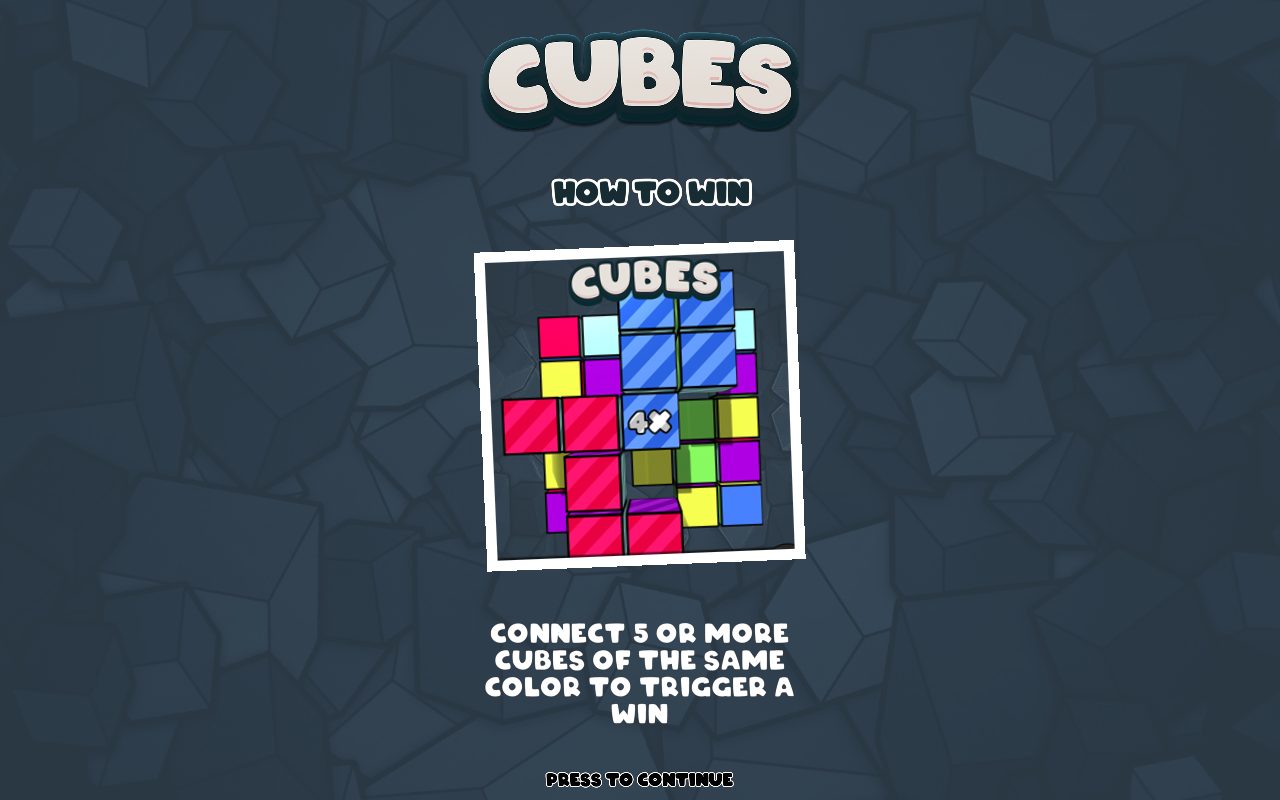
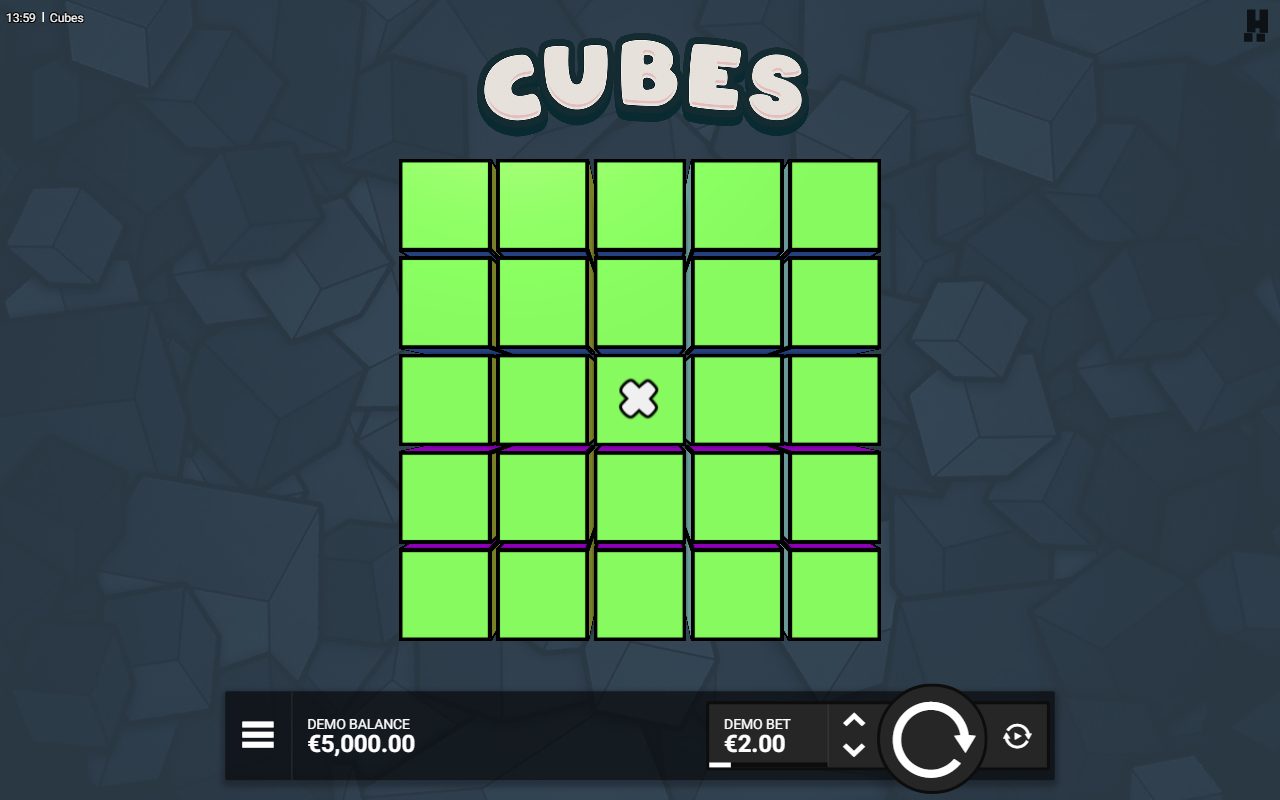
Cubes runs on a 5x5 grid at the start of every spin, requiring a minimum cluster of five matching colored symbols to register a win. There are six symbol colors — green, yellow, red, turquoise, purple, and blue — each paying between 0.1x stake for a five-symbol cluster and 40x for a cluster of 25 or more. The pay structure scales steeply with cluster size, which means the grid expansion mechanic isn't just cosmetic — it directly multiplies payout potential.
Every winning cluster triggers the Reel Expansion feature. The grid grows outward by one layer per consecutive win, moving from 5x5 to 7x7, then 9x9, and capping at 11x11. The original symbols stay in place during each expansion, so winning clusters that survive the growth can extend further or combine with newly added symbols of the same color. This creates a cascade-style momentum where one well-placed cluster can compound across multiple grid sizes in a single spin sequence.
At the center of the grid sits the progressive multiplier symbol — a white 'x' displayed on a colored cube. Any winning cluster that matches the color of that cube increases the multiplier to equal the number of cubes in that winning cluster. The multiplier can reach 22x during the base game, which is the mechanic that drives the slot's bigger base-game hits. It resets between spin sequences, so the tension is always in whether a current chain can push the multiplier high enough before the wins stop.
Bonus Features Breakdown
The free spins round is the primary bonus event in Cubes. The key distinction from the base game is that the grid expansion does not reset between free spins — whatever size the grid reached carries over into the next spin. This means a strong opening to the bonus can set up a large play area for the entire feature, significantly increasing the surface available for cluster formation.
Winning clusters that match the multiplier color also remain sticky during free spins. These locked-in clusters can grow further as new symbols land around them, and additional same-color clusters that form will continue adding to the progressive multiplier. The combination of a non-resetting grid and sticky clusters is what makes the bonus round the main event — the base game is functional and engaging, but the free spins is where the 3,167x max win becomes a realistic target rather than a theoretical ceiling.
The features list for Cubes is: Cluster Pays, Free Spins, Multiplier, and RTP range. There is no bonus buy option in the standard feature set, which means reaching the free spins relies on triggering it organically through base-game play. For players who prefer direct access to the bonus, that absence is a genuine limitation worth factoring in.
Spindex Live Data: Tracked Bets and Recent Hits
Cubes has logged 229 tracked bets across Spindex's five crypto-casino sources over the past 30 days, placing it in the mid-tier activity range for Hacksaw titles on the platform. The current trend signal is warm — not a breakout spike, but consistent enough volume to suggest steady player interest rather than a fading catalog slot.
The top recent hit recorded in that window is 238x. That's a meaningful data point: 238x against a 3,167x theoretical ceiling tells you the bonus round's upper range isn't being frequently reached in current tracked sessions. It's consistent with medium volatility behavior — the slot is delivering regular smaller returns rather than infrequent large ones, which matches the 31.94% hit frequency on paper.
For players using Spindex to time their sessions, the warm trend signal suggests active tables and fresher RNG cycles across the tracked casinos. The 229-bet sample is large enough to treat as directionally reliable rather than noise. If the trend shifts to hot in coming weeks, Cubes would warrant a closer look from players who track momentum signals.
Symbols and Paytable
Every symbol in Cubes is a colored cube — there are no wilds, scatters, or traditional card-rank low pays. The six colors each carry identical pay structures: 0.1x for the minimum five-symbol cluster, scaling up to 40x for a cluster of 25 or more. The uniformity keeps the paytable simple to read, and the absence of tiered symbol values means no single color is meaningfully more valuable than another in isolation.
The meaningful pay differentiation comes entirely from cluster size, which is what the grid expansion mechanic is designed to build. A 40x symbol win on a 25+ cluster, combined with a 22x multiplier active at the time, illustrates how the top end of the pay range is constructed — it requires both a large cluster and a high multiplier running simultaneously, which is a relatively rare alignment.
The paytable's simplicity is a deliberate design choice that keeps the focus on the mechanical loop rather than symbol hunting. Players who prefer complexity in their paytable structure may find this sparse, but for the audience Cubes targets, the clarity is a feature rather than a flaw.
Who Should Play Cubes
Cubes is best suited to players who want regular base-game feedback without the long dry spells that high-volatility slots demand. The 31.94% hit frequency and medium variance make it a workable option for session-based play where bankroll longevity matters — a $20 deposit at the $0.20 minimum bet gives 100 spins with meaningful cushion against variance.
The cluster-pays format and expanding grid will appeal to players who enjoy mechanic-driven slots over traditional payline structures. The bonus round's sticky clusters and non-resetting grid add a layer of strategic satisfaction that pure payline slots don't offer — watching the grid build across free spins is a distinct experience.
High-volatility players chasing four- or five-figure multipliers will find the 3,167x ceiling limiting. If that's the target, Hacksaw's own catalog has better options. But for players who value a well-balanced session slot with above-average RTP and a coherent mechanic, Cubes makes a strong case.
Final Verdict
Cubes holds up as one of Hacksaw Gaming's more considered designs. The expanding grid and progressive multiplier aren't gimmicks layered on top of a standard slot — they're the actual engine of the game, and they work together in a way that creates genuine tension during winning streaks. The free spins round, with its non-resetting grid and sticky clusters, is the mechanic that separates Cubes from generic cluster-pays titles.
The 96.35% RTP is a real positive, sitting above both the industry standard and Hacksaw's own studio average. The 3,167x max win is the honest trade-off for medium volatility — it's enough to make the bonus worth chasing, but it won't satisfy players whose benchmark is 10,000x or higher. Spindex's current warm trend signal and 229 tracked bets over 30 days suggest the game maintains a stable player base four years post-release, which is its own endorsement.
One mild observation: the base game can feel slow between bonus triggers. The hit frequency keeps it alive, but the most interesting mechanics are locked behind the free spins, and the wait can drag across longer sessions. That's a pacing trade-off, not a flaw, but it's worth knowing before committing to extended play.
- +96.35% RTP sits above industry average and Hacksaw's own studio baseline
- +31.94% hit frequency supports steady base-game activity
- +Expanding grid (5x5 to 11x11) and progressive multiplier up to 22x work as a coherent system
- +Free spins with non-resetting grid and sticky clusters add meaningful depth
- +Wide bet range ($0.20–$100) suits most bankroll sizes
- +Simple paytable is easy to read and track during play
- -No bonus buy feature — free spins must be triggered organically
- -3,167x max win ceiling is modest compared to high-volatility Hacksaw titles
- -Base game pacing can drag before the free spins trigger
- -RTP range feature means some casino configurations may offer lower returns
Best for
Cubes is one of Hacksaw Gaming's most mechanically coherent releases. The expanding grid and progressive multiplier feed each other cleanly, the 31.94% hit rate keeps sessions alive, and the 96.35% RTP is above average. The 3,167x ceiling won't excite high-volatility hunters, but for medium-variance cluster-pays play, this holds up well even four years after release.