


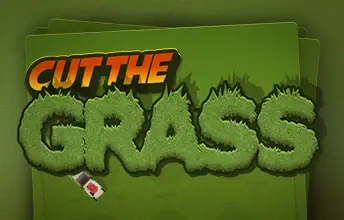


Cut the Grass Review
Cut The Grass is a scratch ticket from Hacksaw Gaming, released in September 2018. It runs on a 3x3 grid with no traditional paylines — this is a scratch-card product, not a reel slot, so the mechanics work differently from anything in Hacksaw's video-slot catalogue. The bet is fixed at $2, meaning there is no stake flexibility whatsoever. The single listed feature is an RTP range, which signals that the return-to-player shifts depending on the ticket variant or prize tier rather than sitting at one static percentage. The published base RTP is 75%, which is substantially below the regulated minimum in many jurisdictions and well beneath the 96%+ figures Hacksaw posts on titles like Wanted Dead or a Wild. That gap is the most important number in this review, and it deserves a clear-eyed look before anything else.
What Cut The Grass Actually Is
Cut The Grass sits in the scratch-ticket category, not the video-slot category. That distinction matters more than the Green and Razor theme tags suggest. There are no spinning reels, no cascading symbols, and no free-spin round. The 3x3 grid is a scratch layout — reveal the cells, check the result, move on. Hacksaw Gaming built a substantial scratch-card library in its early years before its video slots took over the conversation, and this 2018 title is part of that foundation.
The fixed bet of $2 (minimum and maximum) means the product is designed for a specific price point with zero flexibility. You cannot scale down to $0.10 or up to $20. That rigidity is unusual even within scratch-card products, where many competitors offer tiered ticket prices. For players who want to manage session length through stake size, that constraint is a real limitation.
The themes listed — Green and Razor — are categorical descriptors rather than an elaborate narrative. Visually, this is a straightforward scratch-card interface. There is no animated intro sequence or progressive storyline to account for.
RTP, Volatility, and the RTP Range Feature
The published RTP for Cut The Grass is 75%. To put that in context: Hacksaw's video slots routinely sit between 96% and 97%, and even within scratch-card products, an RTP below 80% is on the low end of what regulated markets typically accept. The UK Gambling Commission, for example, sets an 80% floor for many remote gaming products. Players in markets with stricter oversight may encounter a different variant with a higher return.
The sole listed feature — RTP range — is the key to understanding how this title actually works in practice. An RTP range means the return is not a single fixed percentage but varies across ticket configurations or prize tiers. The 75% figure likely represents the base or lowest tier. The upper bound of that range is not published in the verified spec data, so no ceiling figure can be stated here.
Max win is also unconfirmed. Hacksaw has not published that figure for this title. Unlike the RTP gap situation, where 75% is a hard known number, the max win absence simply means the prize structure is opaque from a public-data standpoint. The combination of a low base RTP, a variable return range, and an undisclosed top prize makes this one of the harder Hacksaw products to evaluate analytically.
How the Scratch-Ticket Format Changes the Maths
Scratch tickets and video slots are governed by different probability architectures. A video slot generates outcomes via an RNG on every spin, with RTP averaged across millions of rounds. A scratch ticket draws from a finite prize pool — a set number of winning and losing tickets exist in each batch, and RTP is determined by how that pool is constructed. The distinction matters because short-session variance behaves differently: you can exhaust a bad batch quickly, or land in a favourable one.
For Cut The Grass, the fixed $2 stake means session cost is entirely predictable. Ten tickets cost exactly $20. That budget clarity is one genuine structural advantage of fixed-price scratch products over variable-stake slots. At 75% base RTP, the expected return on that $20 is $15 — a $5 expected loss, which is a steeper house edge than virtually anything in Hacksaw's video-slot catalogue. Wanted Dead or a Wild, for instance, runs at 96.38% RTP, meaning the same $20 carries an expected loss of roughly $0.72 at minimum stake.
The RTP range feature could shift that calculus upward depending on which ticket variant is in play, but without a confirmed upper bound, the conservative assumption is the 75% floor.
Who Cut The Grass Is Best For
The scratch-ticket format has a genuine audience: players who want instant resolution, no bonus-round waiting, and a fixed spend per game. Cut The Grass delivers all three. If the appeal is the scratch-card experience itself rather than maximising expected return, the format works as intended.
The fixed $2 price point also makes it a reasonable occasional novelty for players who already have Hacksaw's video slots as their primary activity. Spending $2 on a scratch ticket as a palette cleanser between longer sessions is a different proposition than using it as a primary bankroll vehicle.
However, players whose primary concern is RTP — and many serious slot players do track this — should be aware that 75% is a significant step down from what Hacksaw publishes elsewhere. The slot is not well-suited to extended grinding sessions or bankroll-building strategies. It is a fixed-cost, instant-result product, and it should be approached as exactly that.
Final Verdict
Cut The Grass does what a scratch ticket is supposed to do: deliver an instant result at a known cost. The 3x3 grid, fixed $2 stake, and straightforward mechanics make it accessible and quick. The RTP range feature adds a layer of variability that could push returns above the 75% base, though the upper limit remains undisclosed.
The 75% base RTP is the number that will define most players' opinion of this title. It is the lowest confirmed RTP figure in Hacksaw's publicly documented catalogue and sits well below the studio's video-slot standard. That is not a flaw in the scratch-card format broadly — some scratch products from other providers run at 90%+ — but it is a meaningful data point for anyone comparing options.
For scratch-card enthusiasts who want a Hacksaw product in that format, Cut The Grass is functional and straightforward. For players optimising for return, Hacksaw's video-slot library is a more favourable starting point.
- +Fixed $2 stake makes session budgeting simple and predictable
- +Instant-result scratch format — no waiting for bonus rounds
- +RTP range feature means return may exceed the 75% base on certain ticket tiers
- +Part of Hacksaw Gaming's regulated catalogue with established operator distribution
- -75% base RTP is significantly below Hacksaw's video-slot standard and below many market minimums
- -No stake flexibility — $2 is both the minimum and maximum bet
- -Max win figure is not publicly disclosed
- -Upper bound of the RTP range is unconfirmed, making full value assessment difficult
Best for
Cut The Grass is a bare-bones 2018 scratch ticket with a fixed $2 stake and a 75% base RTP — one of the lowest figures in Hacksaw's catalogue. The RTP range mechanic introduces some variance in return across ticket tiers, but the ceiling is unconfirmed. Best suited to players who specifically want a quick scratch-card format; anyone chasing value should check Hacksaw's video-slot lineup first.