






Rotiki Review
Play'n Go's Rotiki landed in June 2022 with a design philosophy that runs counter to the high-volatility arms race dominating the modern slot market. Built on a 6x8 cluster-pays grid, it caps wins at 1,000x — a ceiling that will immediately filter out anyone chasing four- or five-figure multipliers. What it trades in raw ceiling, however, it partly recovers in max-win probability: hitting that 1,000x is estimated at 1 in 21,541, a frequency that sits well above the norm for slots in this payout range.
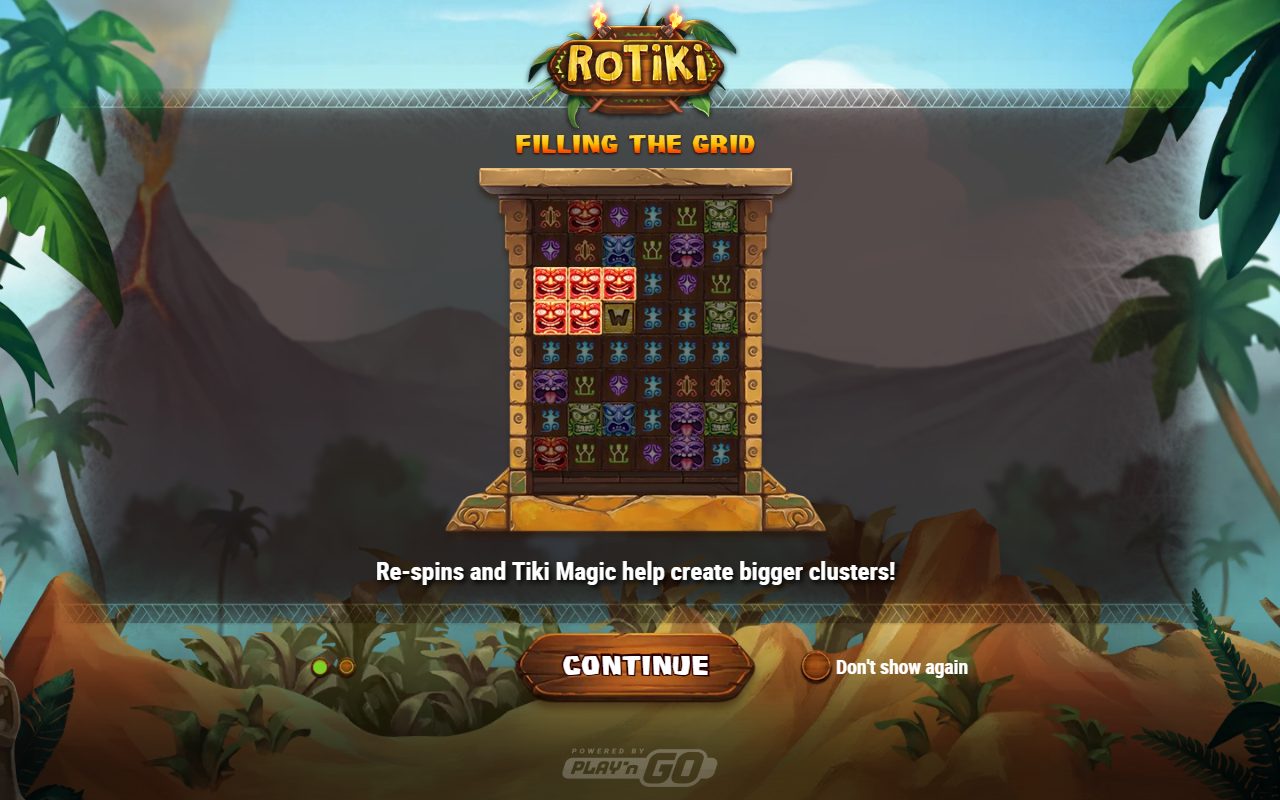
The core loop is built around sticky winning symbols, a respin chain that keeps extending as long as new clusters form or full rows complete, and a pick-object bonus that assigns the final multiplier once the grid fills. The mechanic has a satisfying escalation to it — each respin either builds on the existing win or resets the countdown, so there's genuine tension in watching the grid fill position by position.
At a bet range of $0.05 to $100 and medium volatility, Rotiki is clearly engineered for recreational play rather than high-roller sessions. The RTP is listed at 94.2% in its base configuration, though the game supports a customizable RTP range — a detail worth checking at your specific casino before you commit.
RTP, Volatility, and What the 1,000x Cap Actually Means
The published RTP for Rotiki is 94.2%, which sits noticeably below the 96% benchmark that most players use as a reference point. Play'n Go built in a customizable RTP range, so the figure at any given casino may differ — always check the in-game paytable or the casino's published game specs before playing for real money. The gap between 94.2% and a 96%+ configuration is meaningful over long sessions.
Volatility is rated medium, which aligns with the mechanics: wins come with reasonable regularity through the respin chain, but the multiplier pick game introduces a spike of variance at the climax. The 1,000x max win is low by 2024 standards — Hacksaw Gaming's Aztec Twist, a direct thematic competitor on a similar 5x8 cluster grid, reaches 6,800x, while Relax Gaming's Temple Tumble 2 pushes to 10,045x. Rotiki doesn't compete on ceiling.
Where the math does work in the game's favor is the max-win probability of 1 in 21,541. For context, many high-volatility slots with 10,000x+ ceilings have max-win probabilities in the range of 1 in several million. Rotiki's figure means players in a reasonably active session have a realistic — if still rare — shot at the top prize. That reframes the 1,000x not as a disappointment but as a consistent target rather than a theoretical fantasy.
How Rotiki Plays: The 6x8 Grid and Cluster Mechanics
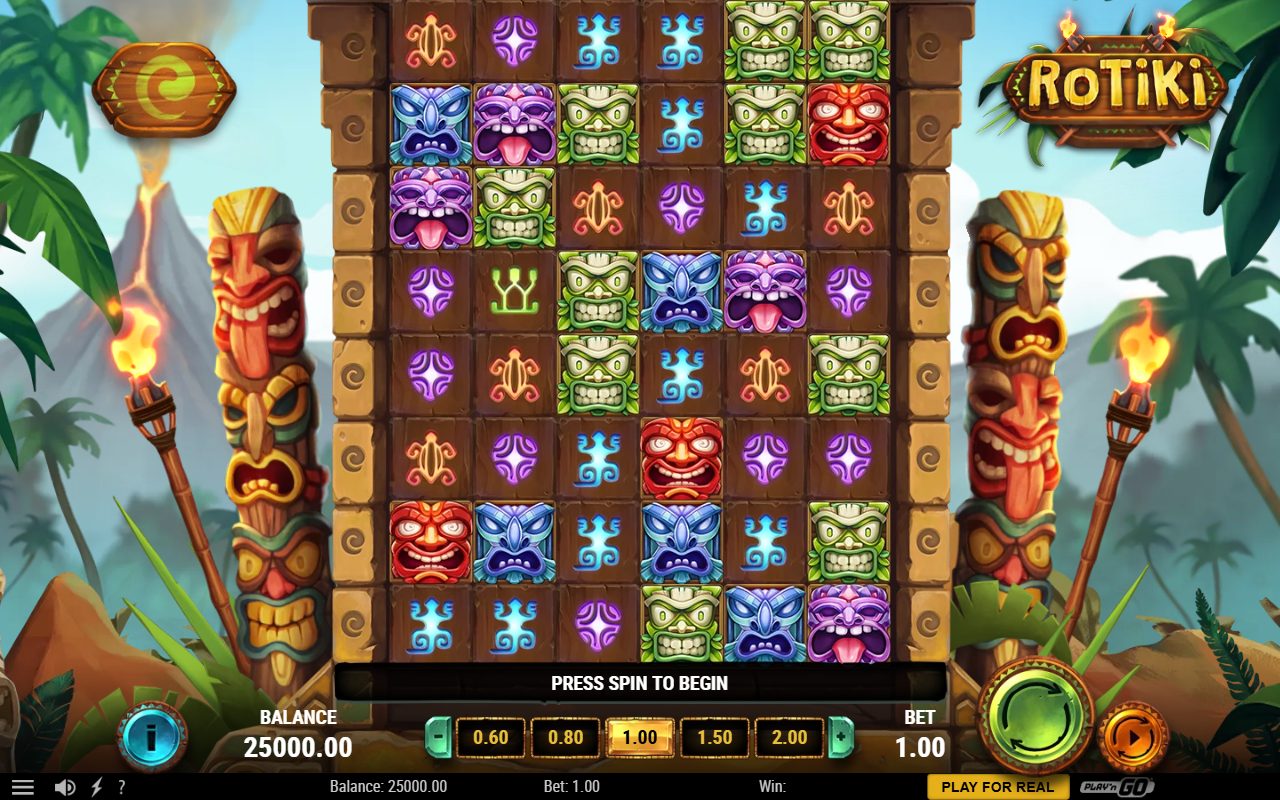
Rotiki runs on a 6-reel, 8-row grid with cluster pays — no fixed paylines. A winning cluster requires a minimum of 5 matching symbols connected anywhere on the grid, and clusters can scale all the way up to 48 symbols, which would fill the entire board. Symbol values are calibrated conservatively: a 48-symbol cluster of the top pay symbol returns 100x the stake, which means even a full-screen win of a single symbol type doesn't automatically produce a massive payout without multiplier assistance.
The Wild symbol substitutes for all standard pay symbols and carries an additional function: at the end of a respin sequence, Wilds rotate to reveal either a standard Wild or one of two Tiki Magic Power modifier symbols. Those modifiers provide win improvements that layer on top of whatever the respin chain has already built. The exact modifier effects are drawn from the Symbol Swap mechanic listed in the feature set.
The reel rotation mechanic is central to the experience. After a winning cluster lands, non-winning symbols are replaced through a rotation rather than a traditional cascade drop. It's a visual distinction that also affects pacing — the grid feels more active per spin than a standard tumble engine, and it reinforces the Tiki totem theme without requiring any written description of the aesthetics to make the connection.
Respin Feature: How the Chain Builds
Every winning cluster triggers 3 respins. During those respins, winning symbols lock in place while the remaining positions rotate in new symbols. If the respin produces either an improvement to the existing cluster or a brand-new cluster elsewhere on the grid, the respin counter resets to 3. Completing a full row with winning symbols adds a bonus +3 respins on top of whatever count is currently active.
The chain can extend for a significant number of respins in a strong sequence, with the grid gradually filling from the initial cluster outward. The respin tally mechanic creates a natural escalation structure: early in the chain, every new symbol matters; later, with most of the grid locked, the final few positions carry disproportionate weight in determining whether the full-screen bonus triggers.
This structure is where the game earns its medium-volatility label. Most sessions will produce moderate respin chains with partial grid fills and no pick-game trigger. The full-screen outcome — which unlocks the Treasure Room — is the genuine high point, and its relative rarity is what keeps the pick game feeling like a payoff rather than a routine event.
Bonus Game: The Treasure Room Pick
Filling the 6x8 grid with winning symbols triggers the Treasure Room, a pick-object bonus game. Players select from a set of objects to reveal multiplier values, with the accumulated multiplier applying to the total win built during the respin chain. The multiplier can reach a maximum of 10x, and since the full-grid win already represents the largest possible base payout, the 10x multiplier on top is what produces the 1,000x ceiling.
The pick mechanic introduces a layer of player agency — or at least the perception of it — at the most important moment in any given session. Landing a full grid and then picking toward the 10x multiplier rather than lower values is the defining swing of the game. Lower multiplier outcomes from the pick game are the primary reason full-screen wins can still feel anticlimactic; without a strong pick result, the base win from 48 symbols at 100x stake is only 100x before the multiplier, and a 2x or 3x pick result keeps the final payout well below the cap.
There is no standalone bonus buy feature listed in the game's feature set, which means the Treasure Room can only be reached by building a full-screen win organically through the respin chain.
Bet Range and Practical Bankroll Considerations
Rotiki accepts bets from $0.05 to $100 per spin, covering the full spectrum from micro-stakes casual play to mid-range sessions. The $0.05 minimum makes it accessible for players managing tight bankrolls or testing the respin mechanic without significant exposure.
At medium volatility, bankroll swings are manageable compared to high-variance cluster slots, but the 94.2% base RTP does represent a steeper house edge than the 96%+ games that dominate most recommended lists. Over 1,000 spins at $1 per spin, the expected return difference between 94.2% and 96% is approximately $18 — a meaningful gap for regular players. The customizable RTP range means some casinos may offer a more favorable configuration, so it's worth the extra step of verifying before a real-money session.
The $100 maximum bet positions Rotiki as a casual-to-mid-stakes game. High rollers looking for large absolute payouts will find the 1,000x cap limiting at any bet size, and the lack of a bonus buy means there's no shortcut to the Treasure Room for players who prefer to target the feature directly.
Who Rotiki Is Best For
Rotiki is a strong fit for players who prioritize session length and mechanical engagement over peak payout potential. The respin chain creates a steady rhythm of small-to-medium wins, and the full-grid build-up provides a genuine climax that doesn't require a massive bankroll to experience. Players who find high-volatility slots frustrating — long dry spells punctuated by infrequent big hits — will likely find Rotiki's pacing more comfortable.
The 1-in-21,541 max-win probability is a meaningful differentiator for players who care about realistic jackpot odds. Compared to slots where the top payout is theoretically possible but statistically negligible, Rotiki's ceiling is genuinely within reach over an extended play period. That's a trade-off: lower ceiling, better odds of reaching it.
Experienced grinders and high-volatility players should look elsewhere. The 1,000x cap, the 94.2% RTP, and the absence of a bonus buy make Rotiki a poor fit for anyone optimizing for expected value or chasing large single-session payouts. It's a recreational slot that executes its design brief well, but that brief is explicitly not aimed at the serious end of the market.
Final Verdict
Rotiki does what it sets out to do: deliver a structured, escalating cluster-pays experience with a satisfying pick-game climax, positioned squarely at the casual end of the market. The respin chain is genuinely well-designed, the full-grid build is tense in the right way, and the 1-in-21,541 max-win probability is one of the more player-friendly figures in this payout tier.
The weaknesses are structural and transparent. A 94.2% base RTP is below average, the 1,000x cap will underwhelm anyone coming from high-volatility titles, and the symbol values require multiplier support to produce meaningful payouts even on full-grid wins. None of these are hidden — the game's design communicates its intent clearly.
For the audience it targets, Rotiki is a competent and occasionally engaging slot. For players with different priorities, the same cluster-pays format with higher ceilings and better RTPs exists across multiple providers. Know which category you're in before you load it up.
- +1-in-21,541 max-win probability is highly competitive for a 1,000x cap game
- +Respin chain creates genuine escalation and session engagement
- +Treasure Room pick game adds a meaningful climax to full-grid wins
- +Wide bet range ($0.05–$100) suits casual bankrolls
- +Customizable RTP range may allow more favorable configurations at select casinos
- +Medium volatility keeps session variance manageable
- -Base RTP of 94.2% is below the 96% benchmark most players target
- -1,000x max win is modest compared to thematic competitors like Aztec Twist (6,800x) or Temple Tumble 2 (10,045x)
- -Full-grid wins can still feel underwhelming without a high multiplier from the pick game
- -No bonus buy option — Treasure Room can only be triggered organically
- -Low symbol values require multiplier support to generate significant payouts
Best for
Rotiki is a well-paced medium-volatility cluster slot that suits casual players more than grinders. The 1,000x cap is modest, but the 1-in-21,541 probability of actually reaching it is genuinely competitive. The respin chain and pick-game climax deliver a satisfying loop, even if experienced players will find the symbol values underwhelming without a top-tier multiplier landing.