






The Paying Piano Club Review
Play'n GO's The Paying Piano Club is one of the more intriguing titles on our radar right now — not because of a mountain of published spec data, but precisely because of the opposite. Play'n GO hasn't released official figures for RTP, volatility, max win, or hit frequency at this time, which means the Spindex tracked-bet dataset becomes the primary analytical lens for this review. That's not a limitation — it's where we do our best work. Across 370 bets logged in the past 30 days from seven crypto-casino sources, the game is clearly attracting real action, and a top recent hit of 137x gives us a concrete data point to anchor the discussion. What follows is an honest assessment of what we know, what we're still waiting on from Play'n GO, and who this slot is likely to suit based on observable player behavior.
What Spindex Data Tells Us Right Now
With official specs absent, the 370 tracked bets recorded across Stake, Gamdom, Roobet, Rainbet, Duelbits, Shuffle, and MyPrize over the last 30 days represent the most concrete picture we have of how The Paying Piano Club actually behaves in live play. That's a modest but meaningful sample — enough to identify early patterns, though not large enough to draw firm conclusions about long-run return rates.
The standout figure from this window is the top recent hit of 137x. To put that in context, a 137x return on a $1 bet yields $137 — respectable, but not in the territory of high-volatility titles that regularly produce four-figure multipliers. Compared to Play'n GO's own Reactoonz 2, which has a published max win of 5,000x, or the studio's Tombstone No Mercy at 10,000x, the 137x ceiling observed in our current dataset is conservative. That could mean the game skews lower-volatility, or it could simply reflect a short observation window that hasn't yet captured the slot's upper range.
As the tracked-bet count grows, Spindex will update these figures. For now, the 137x data point is best read as a floor observation, not a ceiling — and the steady 30-day volume across seven platforms confirms this isn't a title that's been abandoned by the player community.
RTP, Volatility, and Max Win
Play'n GO hasn't published an official RTP for The Paying Piano Club, and volatility and max win figures are similarly absent from verified sources at this time. This is worth stating once and moving past — it doesn't make the slot unplayable, but it does mean bankroll planning requires more caution than usual.
The practical implication is straightforward: without a published RTP, you can't calculate expected loss per hour with any precision. A Play'n GO title with a 94% RTP plays very differently over time than one at 96.5%, and until the studio or a licensed regulator publishes the number, that gap in knowledge is real. The Spindex live data partially fills the void — 370 bets give a rough hit-rate impression — but it's not a substitute for a certified return figure.
What we'd recommend: treat The Paying Piano Club as a discovery play at conservative bet sizes until the spec sheet fills out. If you're a data-driven player who sizes bets based on RTP and variance modeling, this one requires patience. If you're comfortable playing on feel and adjusting from session results, the live data we're tracking gives you more than most review sites can offer.
How The Paying Piano Club Plays
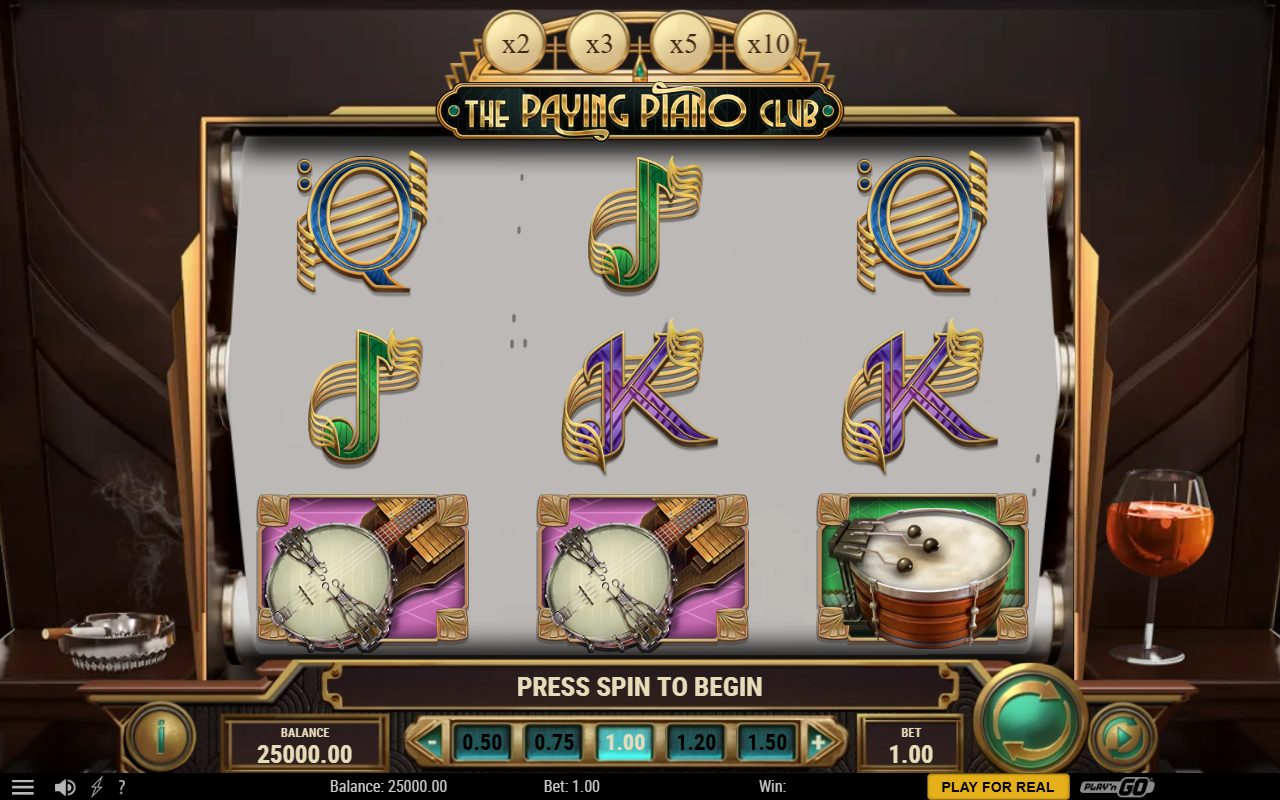
Play'n GO hasn't published layout details — reel count, row configuration, payline structure, and bet range are all currently unconfirmed through verified sources. That's an unusual situation for a Play'n GO release, a studio that typically documents its titles thoroughly across regulated markets.
What the Spindex bet-tracking data does confirm is that the game is live and actively played across multiple crypto casino platforms simultaneously. Titles that appear on Stake, Gamdom, and Roobet concurrently tend to have broad compatibility and stable performance — these platforms are selective about what they surface to their player bases. The consistent 30-day bet volume across all seven tracked sources suggests the game runs smoothly and holds player interest across sessions.
As official layout and mechanic details become available, this section will be updated. Play'n GO's broader catalog leans heavily into cluster pays, Megaways, and feature-buy mechanics in its recent output, but we won't speculate about which format The Paying Piano Club uses until confirmed data is in hand.
Bonus Features
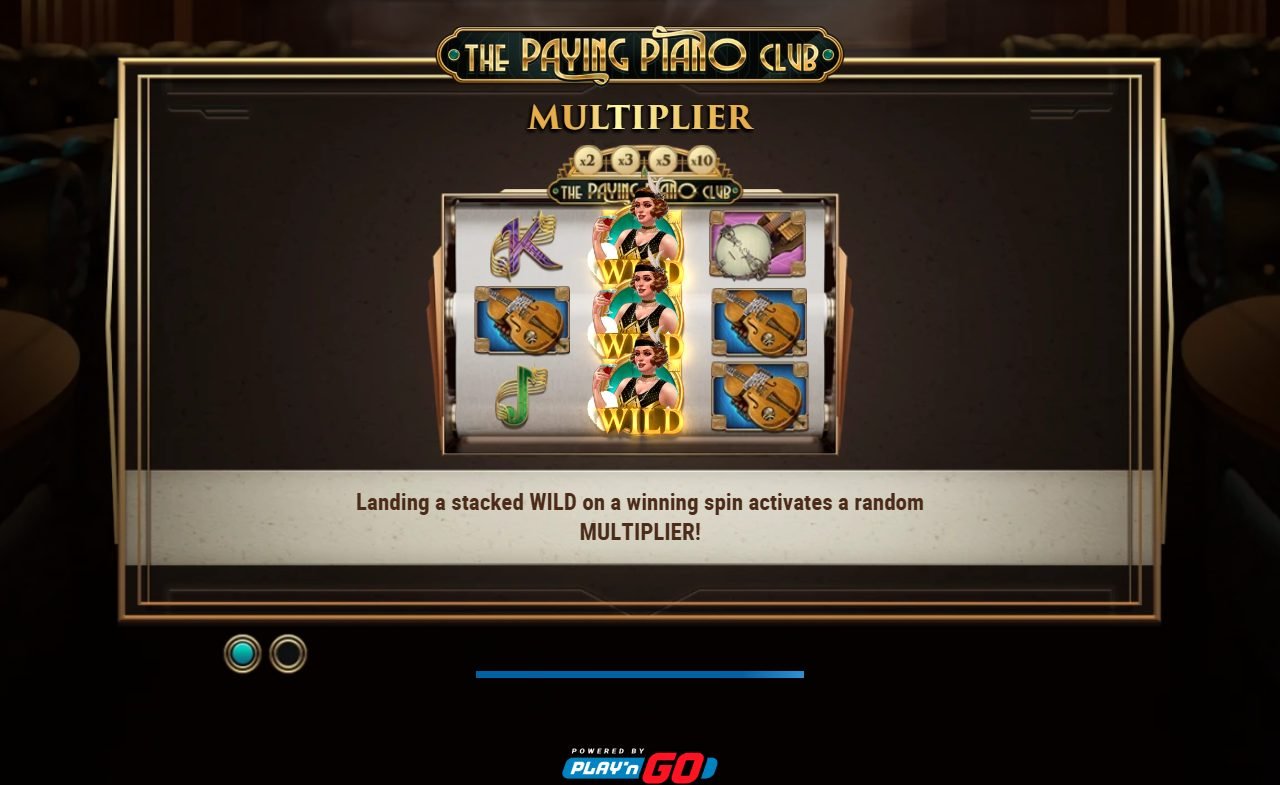
No verified feature list has been published for The Paying Piano Club at the time of writing. Play'n GO hasn't released official documentation detailing free spins rounds, multipliers, bonus buy options, or special mechanics, and the source material available to Spindex doesn't confirm any specific feature set.
Rather than speculate, we're flagging this as a section to watch. Play'n GO's recent output has frequently included bonus buy functionality — a feature that's particularly relevant for the crypto-casino audience where The Paying Piano Club is currently generating its tracked-bet volume. Whether this title includes that option is unknown, and we won't assume it does.
Once Play'n GO publishes a feature breakdown or a reliable third-party source confirms the mechanics, this section will reflect the full picture. Until then, the honest answer is that the bonus structure of The Paying Piano Club is unconfirmed.
Play'n GO as a Provider
Play'n GO is one of the most prolific studios in the regulated slot market, with a catalog spanning hundreds of titles and a strong presence in both European licensed markets and the crypto-casino ecosystem. The studio is known for mechanical variety — it produces everything from simple three-reel classics to complex Megaways and cluster-pay titles — and its RTP transparency record across most of its catalog is solid.
The absence of published specs for The Paying Piano Club is therefore slightly atypical for this provider. Play'n GO titles like Book of Dead (96.21% RTP, 5,000x max win) and Reactoonz (96.51% RTP, 5,000x max win) are among the most thoroughly documented slots in the industry. The Paying Piano Club sitting outside that pattern is worth noting, though it may simply reflect a staggered release rollout where regulatory filings haven't yet propagated to public databases.
Players already familiar with Play'n GO's quality standards can reasonably expect production values and mechanical integrity consistent with the studio's track record. The data gap is a publishing timeline issue, not a signal about the game itself.
Who Should Play The Paying Piano Club
The Paying Piano Club is best suited to players who are comfortable operating with incomplete spec data and who primarily use live session results — rather than published RTP tables — to guide their play. The crypto-casino audience on platforms like Stake and Roobet tends to fit that profile, which likely explains why the game is getting traction there specifically.
Players who rely on volatility ratings and certified RTP figures to size their bets and set session loss limits should wait. There's no responsible way to calculate expected variance without those numbers, and the 370-bet Spindex sample, while useful for directional signals, isn't a substitute for a full statistical picture.
At low bet levels — wherever the minimum sits once confirmed — the risk of session-to-session variance is manageable, and the 137x top hit observed in our tracking window suggests the game isn't entirely flat in its payout distribution. Casual players and discovery-oriented slot explorers will find more to work with here than high-stakes grinders will.
Final Verdict
The Paying Piano Club presents an unusual review challenge: a Play'n GO title with live player traction and zero published spec data. The Spindex tracked-bet dataset — 370 bets, 137x top hit, active across seven crypto platforms — gives this review more substance than a spec-table summary alone would, but it also underscores how much is still unknown.
Play'n GO has a strong enough track record that the absence of published figures is more likely a timing issue than a structural concern. But until RTP, volatility, and feature details are confirmed, the responsible recommendation is to treat this as a low-stakes exploration rather than a session you've budgeted for seriously. The 137x top hit is a reasonable real-world data point, but it's a single observation window — not a volatility profile.
Spindex will continue tracking bets on The Paying Piano Club and will update this review as Play'n GO releases official documentation. Check back for a revised rating once the full spec picture is available.
- +Active across seven major crypto-casino platforms with consistent 30-day bet volume
- +Play'n GO's production pedigree suggests reliable game integrity
- +137x top hit logged in live Spindex tracking — some real win potential observed
- +Spindex will update with live data as the sample grows
- -RTP, volatility, and max win are all unpublished — responsible bet sizing is difficult
- -No confirmed feature set; bonus mechanics are unknown
- -Layout, paylines, and bet range unconfirmed
- -137x top hit is modest compared to Play'n GO's documented high-variance titles
Best for
The Paying Piano Club draws steady crypto-casino traffic despite Play'n GO holding back its core specs. The 137x top hit logged on Spindex suggests moderate win ceilings in recent sessions, though the sample size is still building. Hold off on high-stakes sessions until RTP and volatility figures surface — but at lower bet levels it's worth exploring.