
Viking Runecraft Review
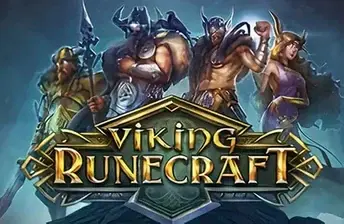
Play'n Go released Viking Runecraft in April 2017, and more than seven years on it still commands attention as one of the studio's most mechanically dense cluster-pays titles. The 7x7 grid, four rotating Norse gods, a cascading win engine, and a bonus meter that builds toward the Rägnarok event all work together to create a slot with a ceiling of 5,000x your stake — but one that demands patience to get there.
The RTP sits at 94.66%, which is below the industry standard of 96% and worth flagging before you commit a session bankroll. High volatility compounds this — wins arrive in clusters rather than steadily, and the base game can run cold for extended stretches. That said, the progressive structure of the bonus meter means every spin has mechanical purpose, which helps the dry spells feel less arbitrary than they do on simpler high-variance titles.
Spindex has tracked 3,000 bets on Viking Runecraft across our five crypto-casino data sources in the last 30 days, with a top recorded hit of 210x. That figure is modest relative to the 5,000x ceiling, which is consistent with what high-volatility cluster games typically show in short-window tracking — the big outcomes are rare and concentrated.

RTP, Volatility, and Max Win: What the Numbers Actually Mean
The 94.66% RTP is the first number any serious player should register. For context, Play'n Go's own Book of Dead carries a 96.21% RTP, and the broader industry benchmark sits around 96%. Viking Runecraft's figure is notably low — roughly 1.5 percentage points below the studio average — which means the house edge is higher than most comparable high-volatility titles. Over long sessions, that gap compounds.
The 5,000x max win is the headline, but reaching it requires triggering the Rägnarok feature, which activates only after the bonus meter fills four times in sequence — a rare chain of events. The path to the ceiling is long and volatile. For comparison, Play'n Go's Reactoonz 2 also runs cluster pays with high volatility and offers a 5,000x ceiling at a 96.20% RTP, making it a structurally similar option with a meaningfully better return rate.
Bets range from $0.10 to $100 per spin, which accommodates both casual bankrolls and high-roller sessions. Given the volatility profile, lower bet sizing with a deep session bankroll is the rational approach — the bonus meter needs time to cycle through its charge states, and short sessions at high stakes can drain a bankroll before the game's mechanics have a chance to pay out.

How Viking Runecraft Plays: Grid, Clusters, and the God System
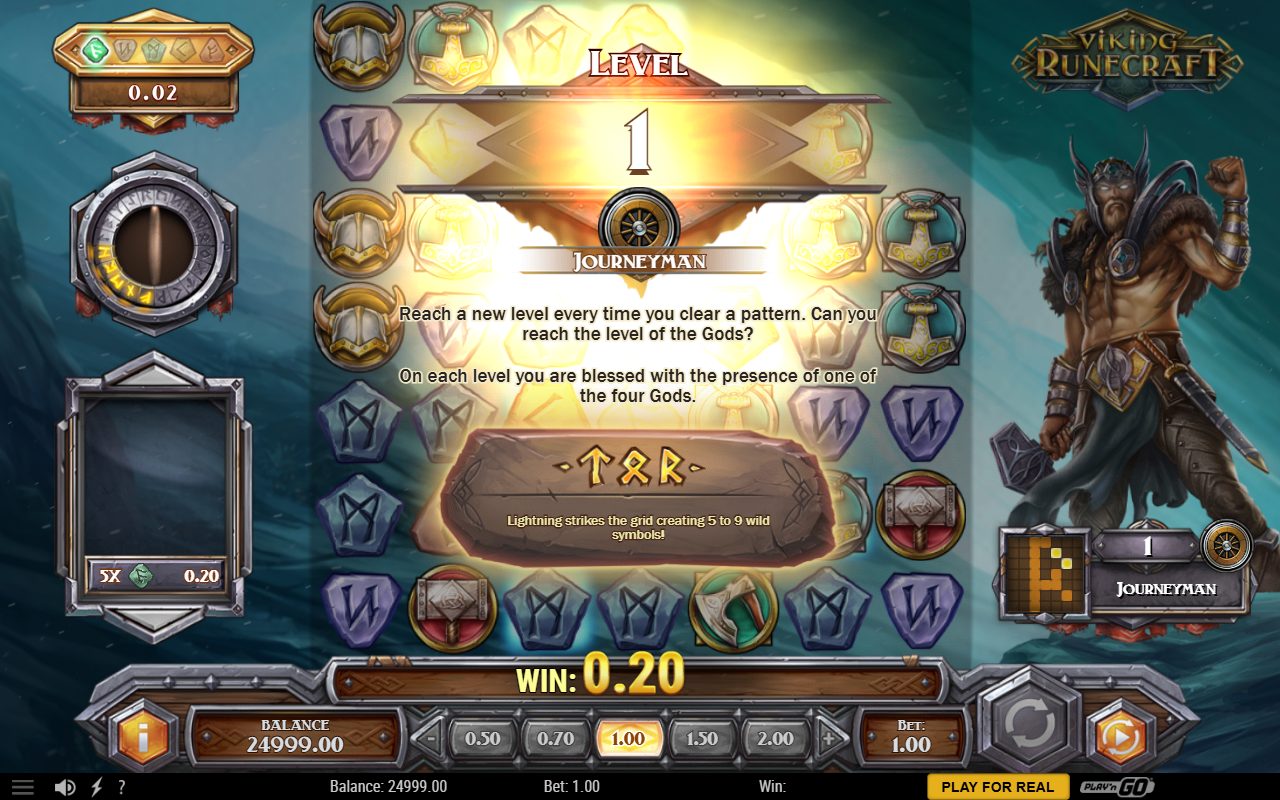
Viking Runecraft runs on a 7x7 grid using cluster pays — no traditional paylines. A win requires five or more matching symbols connected horizontally, vertically, or in a cluster formation. After each win, the winning symbols are removed and new ones cascade down to fill the gaps, creating potential chain reactions from a single paid spin. This cascading mechanic is the engine that drives the game's variance: a single lucky spin can produce multiple consecutive wins without additional cost.
The four gods — Thor, Odin, Heimdall, and Freya — each occupy the side panel and provide randomly triggered reel modifiers on non-winning base game spins. These modifiers activate without cost and can convert dead spins into winning ones. The active god rotates when a winning combination covers the specific background pattern associated with that god, cycling through all four over the course of a session. This system adds a layer of progression to the base game that most cluster slots don't have.
The symbol hierarchy is anchored by Thor's Hammer at the top, paying 1,000x for a cluster of 15 or more. Odin's Helmet pays 250x, Heimdall's Axe 100x, and Freya's Necklace 80x at the same cluster size. Rune stone low-value symbols pay between 10x and 50x for 15+. The pay structure rewards large clusters heavily, which aligns with the cascade mechanic — the longer a chain runs, the bigger the cluster potential.
Bonus Features: Charge of Destruction and Rägnarok
The bonus meter on the left side of the reels fills with each consecutive cascading win. When it reaches capacity, one of four Charge of Destruction features triggers. Fury of Fenrir removes two diagonal lines and converts two others into identical symbols. Judgement of Jörmungand destroys an unbroken chain of symbols and replaces them with a random matching symbol. Scorching of Surtr ignites three symbols, spreading fire across a random cluster and replacing burned symbols with matching new ones. Lure of Loki removes all instances of one random symbol while converting all instances of another into a new symbol type.
Each of these features is a Symbol Swap or destruction mechanic designed to create or extend winning clusters. They vary in how directly they generate wins — Fury of Fenrir and Scorching of Surtr are generally more reliable win-creators, while Lure of Loki introduces more randomness. Triggering the meter four times in a single session without resetting it activates Rägnarok, which applies a multiplier boost up to 15x and then plays all four Charge of Destruction features back-to-back.
The free spins component and bonus wheel are also part of the feature set, accessible through the game's bonus game structure. The Spin the Wheel mechanic adds a prize-selection layer on top of the base bonus triggers. The overall feature stack is substantial — Level Up progression, multipliers, random wilds, symbol swaps, and a wheel bonus all coexist within a single title, which is both the game's greatest strength and the reason its base game can feel slow when none of these mechanics are firing.
Spindex Live Data: 3,000 Tracked Bets in 30 Days
Viking Runecraft generated 3,000 tracked bets across Spindex's five crypto-casino data sources over the past 30 days. That's a moderate volume for a 2017 release — enough to indicate the game maintains an active player base without being a current trending title. The top recorded hit in that window was 210x, which is a solid base-game result but sits well below the Rägnarok-range outcomes that define the slot's ceiling.
The 210x top hit is instructive. It suggests the tracked session pool caught the game in its more common operating range — cascading wins and partial bonus meter fills — rather than the full Rägnarok sequence. This is expected behavior for high-volatility cluster pays: the distribution of outcomes is heavily skewed, with the extreme wins appearing rarely even across thousands of bets. A 3,000-bet sample is unlikely to capture a 5,000x event.
For players using Spindex data to inform session decisions, the 30-day trend on Viking Runecraft shows stable but unspectacular activity. It's not trending hot, but it's not dormant either. The moderate bet volume with a modest top hit suggests players are engaging with it as a long-session, deep-bankroll game rather than a short hit-and-run title — which is exactly how the mechanics are designed to be played.
Mobile and Platform Availability
Play'n Go built Viking Runecraft with cross-platform compatibility from the ground up — the studio has a consistent track record of optimizing releases for mobile browsers and native app environments. The 7x7 grid scales well on portrait-mode mobile screens, and the cluster-pays mechanic doesn't require the fine-grained payline tracking that can make traditional slots harder to follow on smaller displays.
Bets between $0.10 and $100 per spin are accessible across all device types, with no platform-specific restrictions on bet ranges. The game is available at Play'n Go-licensed casinos on iOS, Android, and desktop without feature differences between platforms.
Who Should Play Viking Runecraft
Viking Runecraft is built for players who want structural depth in their slot sessions. The god rotation, bonus meter progression, and multi-stage Rägnarok sequence give experienced players something to track and strategize around, even if the outcomes remain random. It's not a passive game — the mechanic density rewards attention.
The 94.66% RTP is a genuine barrier for players who prioritize return rate. Recreational players or those on tighter bankrolls would be better served by a comparable cluster-pays title with a higher RTP. However, for players who specifically want the Norse mythology theme paired with a complex feature stack and a 5,000x ceiling, Viking Runecraft remains one of the more fully realized examples of the format.
High-volatility players comfortable with extended cold streaks and deep bankroll requirements will find the most value here. The game's design explicitly rewards session length — the bonus meter needs time to cycle, and Rägnarok is a multi-step progression event. Short sessions at high stakes are the worst way to approach it.
Final Verdict
Viking Runecraft is one of Play'n Go's most mechanically ambitious releases, and it holds up structurally even against more recent cluster-pays titles. The four-god system, cascading wins, Charge of Destruction mechanics, and Rägnarok multiplier chain form a coherent and layered feature ecosystem that gives the slot genuine replay value.
The 94.66% RTP is the clearest objection. It's hard to recommend this slot unreservedly when comparable high-volatility cluster titles offer 96%+ returns. Players who accept that trade-off in exchange for the specific mechanic set Viking Runecraft provides will find a well-constructed, high-ceiling game. Those who don't should look at alternatives with better return rates before committing.
Spindex's 30-day data — 3,000 tracked bets, 210x top hit — confirms the game is active but operating in its typical mid-range. The 5,000x potential is real, but it's a rare-event ceiling, not a regular outcome. Approach it as a long-game, high-variance title and it delivers on its promise. Approach it as a quick-session slot and the RTP disadvantage will show itself quickly.
- +Mechanically deep 7x7 cluster pays with four distinct god modifiers
- +Rägnarok feature chains all four Charge of Destruction bonuses with up to 15x multiplier
- +5,000x max win ceiling with multiple bonus pathways
- +Wide bet range ($0.10–$100) suits varied bankroll sizes
- +Fully optimized for mobile and desktop without feature differences
- +Cascading wins give every paid spin extended win potential
- -94.66% RTP is below the industry standard and below Play'n Go's own studio average
- -High volatility with extended cold streaks in the base game
- -Rägnarok requires a multi-step progression chain — rare to trigger in short sessions
- -Feature density can make the game feel slow when bonuses aren't firing
- -Hit frequency is unconfirmed, adding uncertainty to session planning
Best for
Viking Runecraft is a structurally sophisticated slot built for patient, high-variance hunters. The four-god rotation, cascading cluster engine, and Rägnarok multiplier chain give it genuine depth. The 94.66% RTP is a real drawback, and the 5,000x max win is achievable only through the full bonus sequence. Best suited to players who want mechanical engagement, not passive spinning.