




Space Race Review
Space Race is a 2012 video slot from Play'n Go built on a 5x3 grid with 20 fixed paylines. Released in November of that year, it sits in the studio's back catalogue as one of the earlier examples of Play'n Go building a dedicated bonus game sequence into the core loop rather than relying purely on a free spins multiplier. The headline mechanic is a rocket-navigation bonus game triggered by scatter symbols — a feature that sets it apart from the standard free spins fare of its era.
The RTP is published at 94.23%, which is below the modern industry benchmark of 96%, and worth factoring into any session budget. Volatility sits at medium, meaning the win distribution is neither heavily weighted toward rare big hits nor dominated by small-but-frequent payouts. Bets range from $0.01 to $20.00 per spin, keeping the floor accessible. This review breaks down the mechanics, the numbers, and who Space Race is realistically suited to in 2026.
How Space Race Plays
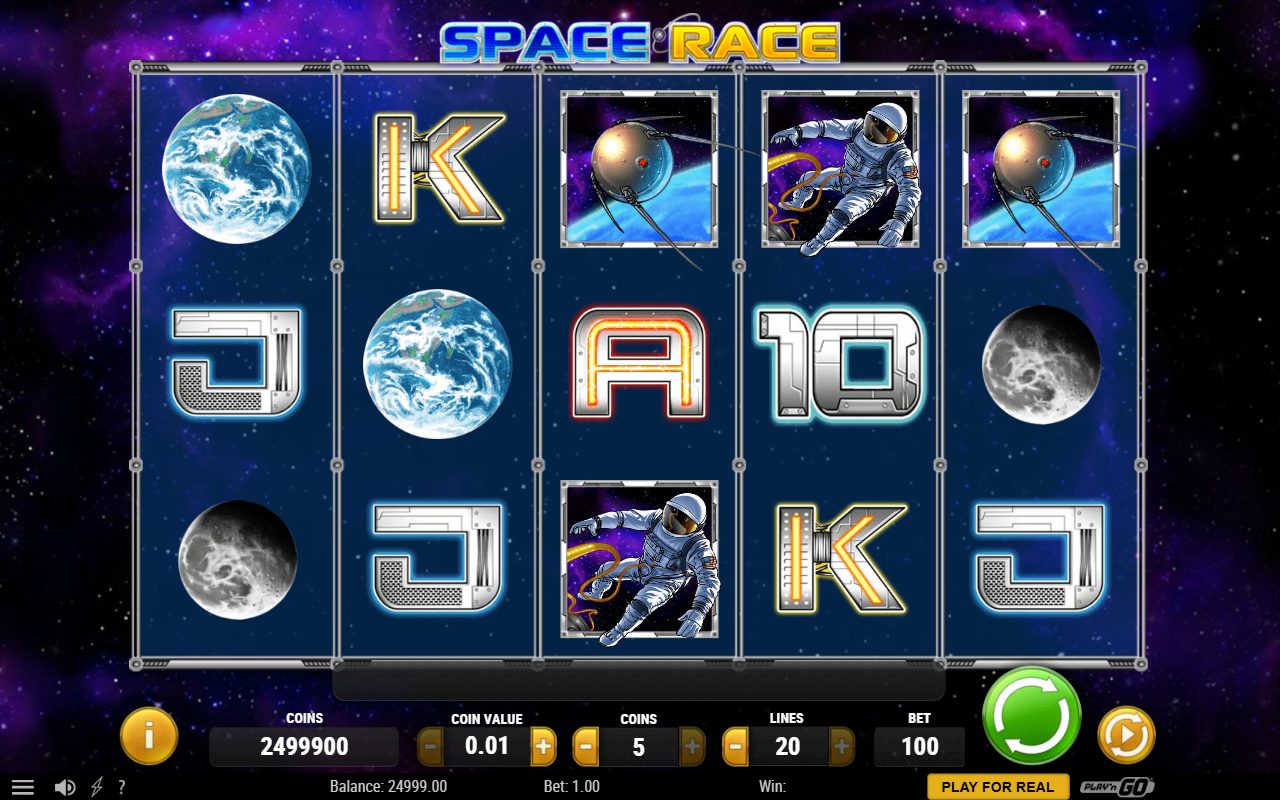
Space Race runs on a standard 5x3 reel layout with 20 paylines. The reel set carries a space exploration theme — astronauts, planets, satellites, a rocket, and a probe fill the symbol grid alongside the lower-pay card-rank fillers. Wild symbols substitute for standard pays, and scatter symbols are the gateway to the main bonus event.
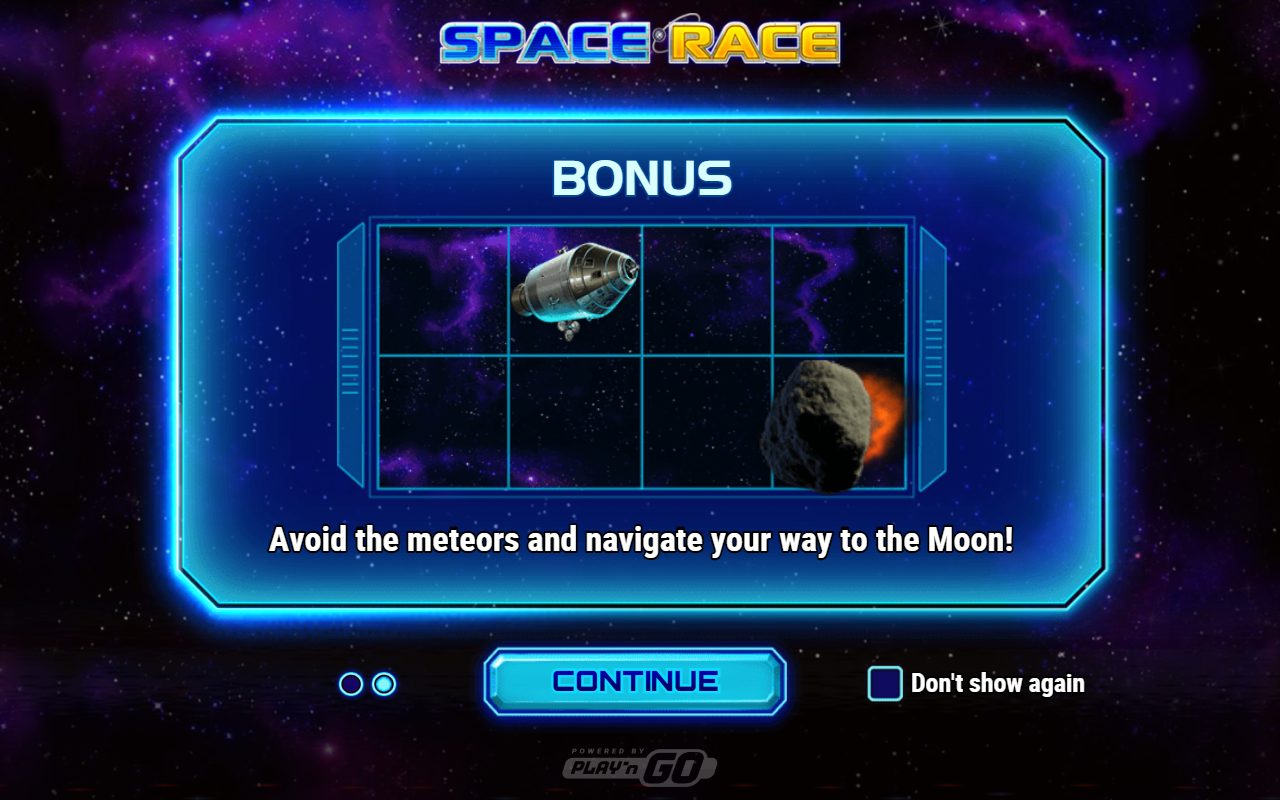
Base game pacing is relatively subdued. Winning combinations trigger minor symbol animations, but the reels themselves don't carry the visual weight of Play'n Go's later output. The bonus game is where the production effort is concentrated: it features an animated sequence in which players guide a rocket through a meteor field, a mechanic that was genuinely uncommon in 2012 and still gives Space Race a point of difference over purely reel-based contemporaries.
At a $0.01 minimum bet, the game is accessible to players who want to explore it at minimal risk. The $20.00 maximum keeps it out of the high-roller bracket entirely. For context, Play'n Go's later releases like Reactoonz 2 support maximum bets several times higher — Space Race was built for a different era of stake structures.
RTP, Volatility, and What the Numbers Mean
The published RTP for Space Race is 94.23%. To put that in direct terms: for every $100 wagered over a statistically significant number of spins, the game is mathematically expected to return $94.23. That theoretical return is notably lower than the current Play'n Go portfolio average, which typically clusters around 96.00–96.50% across their modern catalogue. A gap of roughly 1.8 percentage points may sound small, but across extended play it represents a meaningfully higher house edge.
Volatility is rated medium. In practice, this means Space Race should deliver a reasonably balanced mix of small-to-mid wins during base play, without the long dry spells that define high-variance titles. Players won't be grinding through 200-spin bonus droughts, but they also shouldn't expect the occasional massive outlier hit that high-volatility slots can deliver.
Play'n Go has not published a maximum win multiplier for Space Race, which is not unusual for a 2012 release — max win figures weren't routinely disclosed by providers at that time. The practical implication is that session expectations should be anchored to the RTP and volatility rating rather than a ceiling multiplier. The lower RTP is the single most important number here, and any player choosing between Space Race and a modern alternative should weigh that gap carefully.
Bonus Features Breakdown
Space Race carries four confirmed features: a Wild symbol, Scatter symbols, a Bonus Game, and an RTP range mechanic. The wild functions as a standard substitute across the reel set. Scatters are the trigger mechanism for the bonus game — land the required number and the rocket sequence activates.
The bonus game itself is the slot's defining mechanic. Rather than awarding a flat free spins count, it puts the player in control of navigating a rocket through a meteor storm, with the outcome of that navigation determining the prize. This interactive element was a meaningful differentiator in 2012, when most bonus rounds were passive free spins counters. It adds a layer of engagement that pure reel-spinners from the same period typically lacked.
The RTP range feature listed in the spec data indicates the game supports multiple configured return percentages — operators can select from a range of RTPs when deploying the game, which is why the published figure of 94.23% should be understood as one point within that range rather than a single fixed value. Some casino configurations may run higher. If RTP matters to your session strategy, it's worth checking the game's info panel on the specific casino you're playing at.
Who Space Race Is Best Suited To
Space Race is most likely to appeal to two types of players. The first is anyone with a specific interest in Play'n Go's back catalogue — the slot represents an early example of the studio experimenting with interactive bonus structures before their modern visual and mechanical identity was fully formed. From a historical perspective, the rocket navigation bonus is worth experiencing once.
The second group is casual, low-stakes players who want long sessions at minimal cost. The $0.01 minimum bet and medium volatility make it one of the more forgiving configurations for players managing a small bankroll. Wins arrive with reasonable regularity, and the stakes ceiling of $20.00 means the game never becomes a serious money-management risk at the top end.
High-variance hunters and players optimising for RTP should look elsewhere. The 94.23% return rate is a real cost over time, and the absent max win figure means there's no outsized jackpot potential to justify that edge. Players who regularly play modern Play'n Go titles like Reactoonz 2 or Legacy of Dead — both of which carry RTPs above 96% — will feel the difference in their bankroll over any meaningful session length.
Final Verdict
Space Race is a competently built slot that shows its age in two clear ways: the visual production is restrained by current standards, and the 94.23% RTP sits below what most players can find on a modern title at the same stake levels. Neither of those points makes it a bad game — they just define its audience.
The bonus game remains the strongest argument for playing it. An interactive rocket-navigation sequence in a 2012 release was a genuine design choice, and it still functions as a more engaging bonus structure than many passive free spins rounds from the same period. Medium volatility keeps the experience stable, and the accessible bet range means the lower RTP doesn't have to hurt badly if stakes are managed.
For players building a picture of how Play'n Go evolved as a studio, Space Race is a worthwhile data point. For players purely chasing returns or max win potential, the modern catalogue offers substantially better terms.
- +Interactive rocket-navigation bonus game is a genuine mechanical differentiator
- +Medium volatility delivers a balanced win distribution without extreme dry spells
- +$0.01 minimum bet makes it accessible at very low stakes
- +Historically significant as an early Play'n Go interactive bonus experiment
- -94.23% RTP is below the modern industry benchmark by approximately 1.5–2 percentage points
- -Maximum win multiplier not published — no ceiling figure to anchor expectations
- -Visual production reflects 2012 standards; limited animation outside the bonus sequence
Best for
Space Race is a dated but mechanically honest Play'n Go release. The rocket-navigation bonus game is genuinely distinctive for a 2012 slot, and medium volatility keeps sessions from feeling punishing. The 94.23% RTP is the main drawback — it sits roughly 1.5 to 2 percentage points below what most modern slots offer at the same stake levels. Best approached as a nostalgia play or low-stakes curiosity rather than a primary grinder.